[In this series, Dr. Chengalva Ramalakshmi and Mr. Boddapati Chandrasekhar introduce renowned Telugu short story writers.]


~
Behara Venkata Subbarao – A Fine Portrayer of Middle-Class Sensibilities
”Clad in a white dhoti and a full vest, relaxing in a reclining chair, greeting everyone with an ever gentle smile, he would warmly greet everyone. He remains ever memorable for me.”
That is how Dwadasi Nageswara Rao, who had worked under him and later retired as a postal officer, affectionately and respectfully remembered Behara Venkata Subbarao in his heartfelt note at the beginning of the book Middle-class Sensibilities.


Writers and The Middle Class World:
The middle class has, all over the world, offered writers a rich and varied source of themes. Caught between limited income and social expectations, they struggle to preserve dignity, honour, and appearances.
Their traditions, rituals, marriages, and religious practices often push them beyond their means, yet they continue to live with responsibility and commitment.
They are emotional, self-conscious, humorous, sensitive, and sometimes sharply outspoken; at other times, guarded and tight-lipped. Beneath their smiles lie anxieties, aspirations, pride, and silent suffering. With its endless layers of emotion and contradiction, the middle class remains an inexhaustible reservoir for creative writers.


Early Life:
Born in 1935, at Pidaparthi of East Godavari District, to Satyanarayana and Vijayalakshmi , on the 28 th day of Ashada Bahula Ekadasi, Friday, Behara Venkata Subbarao had four younger brothers and three sisters.
Studied in Polavaram, Yalamanchili Tuni and KothaValasa.
Married Gourikantham.
This couple had two sons and two daughters.
Sri Behara was very brilliant in studies.
He went to Banaras Hindu University for higher studies but had to leave out without getting a degree because of his family responsibilities.
Later, he joined the postal department and retired as a head postmaster.


A Four-Decade Long Literary:
Sri Behara Venkata Subba Rao’s creative literary career as a short story writer spanned over four decades. During which, he penned about 200 stories, 3 weekly serials. His short story.. Koteesu.. was published by The Asian Language Book Society,
Sri Behara, being a middle-class man himself, knew the ins and outs of middle-class life. With his keen powers of observation, he understood the psychology of middle-class people, and reflected it in his short stories – a literary genre he took up at the age of twenty-two.
The mindset of the middle-class people, and their behaviour with neighbours, colleagues at the office, and with fellow passengers on bus and trains is best reflected in Sri Behara’s works. The affection and conflicts of the middle people are also seen in his writings..

While the main chunk of Sri Behara’s works deals with the middle class, some of his stories reveal his philosophical bent of mind. They also reflect his penetrating insight into societal ills.. such as bribery, corruption, the dowry system, and exploitation at various levels, all of which found transformation into stories in his creative hands.
Sri Behara Venkata Subbarao Received many felicitations and honours for his literary output.
He wished to see his stories anthologized during his lifetime. Somehow, that did not happen. In 2006, a small book titled Stories of Behara Venkata Subbarao was published, and it was dedicated to his wife, Smt. Behara Gourikantam. It was unveiled at Katha Nilayam by Kalipatnam Ramarao, the legendary short story writer fondly known in the literary world as Kaara Mastaaru.
In 2025. Middle-Class Sensibilities was released. It stands available as a compendium of all his works.
Kudos to all those who made it possible.


Come, dear readers, let us walk into Behara’s garden of stories and enjoy the fragrance of some of his finest flowers
Let l us look at Behara’s forte – his middle-class stories.
FIRST STORY:
Mother-in-law and the Plantain Tree:
In Brahmin families, the annual death ceremony (Abdikam) is an important ritual, where food is traditionally served on fresh plantain leaves.
This story portrays the anxiety of a middle-class family when they fail to procure those leaves for the ceremony. After many unsuccessful attempts, they somehow manage with a few torn leaves.


A few days later, a tender plantain shoot appears in their backyard. The son asks the servant to remove it, but the mother-in-law stops him, calling it a good omen.
Soon afterwards, the son gets promoted and the grandson secures a Polytechnic seat. The mother-in-law immediately attributes the family’s good fortune to the plantain plant.
Behara beautifully captures the middle-class mind and human psychology through simple domestic conversations. Even the daughter-in-law reminds her mother-in-law that she had once opposed growing a plantain tree at home.
Gradually, the family becomes emotionally attached to the plantain tree. It grows luxuriantly, with broad leaves and fresh shoots everywhere.
Then comes Behara’s delightful ending.
When their neighbour Ramalakshmi asks for a leaf, the mother-in-law generously says:
“Go and cut one and take it.”
The daughter-in-law is stunned, for the old lady guards the tree possessively. She later reveals humorously that every morning the mother-in-law inspects the tree before beginning her daily chores, carefully preserving every usable leaf, while even the father-in-law assists her in the task.
Thus ends the story – with a subtle, reflective touch so typical of Behara’s middle-class world.
A Remarkable Scene from the Story
The moment a tiny banana shoot appeared in the backyard, the entire household burst into commotion.
The conversations, the panic, the excitement – all are narrated with sparkling humor.
It feels less like reading a story and more like watching a hilarious scene from a Jandhyala movie unfold before our eyes. Through such passages, one realizes how brilliantly Sri Behara could handle humour. As you read it, the whole scene plays vividly upon the screen of your imagination.


While brushing his teeth, little Nanaji – the grandson – suddenly let out a loud scream.
I feared he must have spotted a snake or something dreadful.
In panic, I dropped the bucket I was drawing water with right where I stood. Calling out to my husband inside the house, I ran toward Nanaji. But Mother-in-law, who had been plucking nandivardhana flowers, reached him even before I did.
“Hey Raja! Seetharamudu! Come here at once!”
Now it was her turn to shout.


My husband came rushing out, half his face still covered with shaving foam, razor in hand. Raja followed close behind – poor fellow must have been filling ink into his pen – his hands smeared with ink, his clothes splattered with it.
The moment I saw the two of them, I could hardly contain myself; I burst out laughing.
Pointing dramatically toward the jasmine creeper, Mother-in-law exclaimed,
“Look there!”
Joy danced all over her face.
“Oh, that! You screamed as though the house was collapsing! Now my clothes are ruined with ink!” grumbled Raja irritably, and turned back.
I looked at my husband’s face.
Silently, he pointed to his cheek.
In his hurry, the blade had nicked him, and blood was oozing out.
Seeing his plight, I broke into peals of laughter.
Friends, what do you say?
You agree with me, don’t you?


SECOND STORY:
Bhagavanthudu, ( God )
Summary: The Misjudged Hero
The Setup: On a scorching summer day, Sakunthala and her daughter board a rickshaw driven by Ramulu, a muscular and energetic young man.
The Suspense: As Ramulu speeds down the deserted streets, he repeatedly glances back at them. Terrified by the isolation, Sakunthala fears he is a predator planning to assault them.
The Twist: The real danger emerges when two lust-blinded men ambush them and attempt to molest her daughter.
The Resolution: Ramulu fiercely fights off the attackers, saving the girl but getting wounded in the process. Overwhelmed with gratitude and realizing and repenting for her misjudgment, Sakunthala treats him as a hero and insists he stays for dinner.
That evening, as a strong young man was pulling the rickshaw, Sri Behara portrayed, with remarkable naturalness and realism, the fears and anxious imaginings that arose in Shakunthala’s mind – fears born in her both as a mother and as a woman travelling alone with her daughter.
“What might happen? Would Ramulu do something improper?”
Such disturbing thoughts kept crowding her mind in many forms, leaving her restless, frightened, and emotionally shattered. Sri Behara depicted Shakunthala’s disturbed state of mind with great psychological insight.
Then comes a wonderful turn in the story.


In that young man, she saw divinity itself. She showed him great kindness by asking him to stay at their house that night, have dinner with them, and leave only the next morning.
Look at these concluding words – the conversation between Shakunthala and Ravulu:
“No, madam.. I am a Harijan.
I am not even worthy to stand before you.”
To which Shakunthala replies:
No, Ravulu. You must accept our hospitality.
Harijans are people dear to Hari.
All those who help the distressed are indeed dear to that Hari.
What profound and thought provoking lines!
“All those who help the distressed are dear to Hari.”
Yes, it is true. What a beautiful definition of God!
To see God in human beings and in their acts of goodness is indeed a noble thought – a mark of true refinement and largeness of heart.
Sri Behara’s literary brilliance does not stop there.
Look at this concluding touch:
Shakunthala’s husband, who knew nothing of what had happened, was astonished to hear his wife – a deeply orthodox woman, one who strictly followed traditional customs to the extent of even washing the salt brought from the market before using it – speak in such a manner.
See how magnificently Sri Behara elevated what appears to be an insignificant character.
Only a seasoned writer can achieve such moments with such effortless artistry.


Third Story:
Dark Lives (Cheekati Brathukulu)
This is how the story opens..
“It was the month of Vaisakha. At the same auspicious hour, six weddings were going to be celebrated. But while the other five weddings were one thing, the wedding at the President’s house was on an entirely different scale. Even the people who had come to attend the other weddings were fascinated by the grand wedding at the President’s house.”
These lines reveal Sri Behara’s skill in suggesting an entire social atmosphere with very few words. Without lengthy description, he establishes the prestige, power, and influence of the President in the village. The contrast – “the other five weddings were one thing, but the President’s wedding was altogether different” – immediately conveys social hierarchy and public psychology.
They also show his talent for economical storytelling. In just a few lines, he creates curiosity, setting, mood, and the collective mindset of the people. This ability to say much with minimal words is one of the strengths of his narrative craft.
Lter, the writer describes pandal decorations and the beautiful and elegant electric lightning.
Look at these sentences
Yes! They (electricians) hailed from Madras.
Lighting arrangement itself cost one thousand rupees.
Looks like a paradise!
Behara not only describes the grandeur, but also captures the people’s amazement and admiration through simple details. It also again reflects Behara’s ability to create a vivid social scene with a few carefully chosen details.
Everything was at its best at the President’s wedding. Suddenly, the electric lights went off and darkness spread everywhere. Pattabhi, the President, was furious. Brahmam, the expert in repairing Petromax lights, was immediately called for, though he had been suffering from fever for a month. Unable to refuse the President’s call, he came at once and repaired the lights. The marriage pandal glittered once again, and Brahmam was promised medical treatment the next day.
How crisp and effective the narration is! In just a few lines, Behara brings out the grandeur of the wedding, the authority of the President, Brahmam’s helplessness, and the social indifference around him.
“The wedding was over. The palanquin procession began – the military band in front, the palanquin behind, followed by the wedding party and the entire village. Amid great festivity, that grand procession passed right in front of Brahmam’s hut. But Brahmam was not destined to see it. Lying collapsed inside his hut, Brahmam had breathed his last. Yet no one even noticed him.”
What a moving and ironic ending! The man who brought light to the wedding remained in darkness himself. Without preaching, Behara powerfully exposes society’s insensitivity through this contrast.


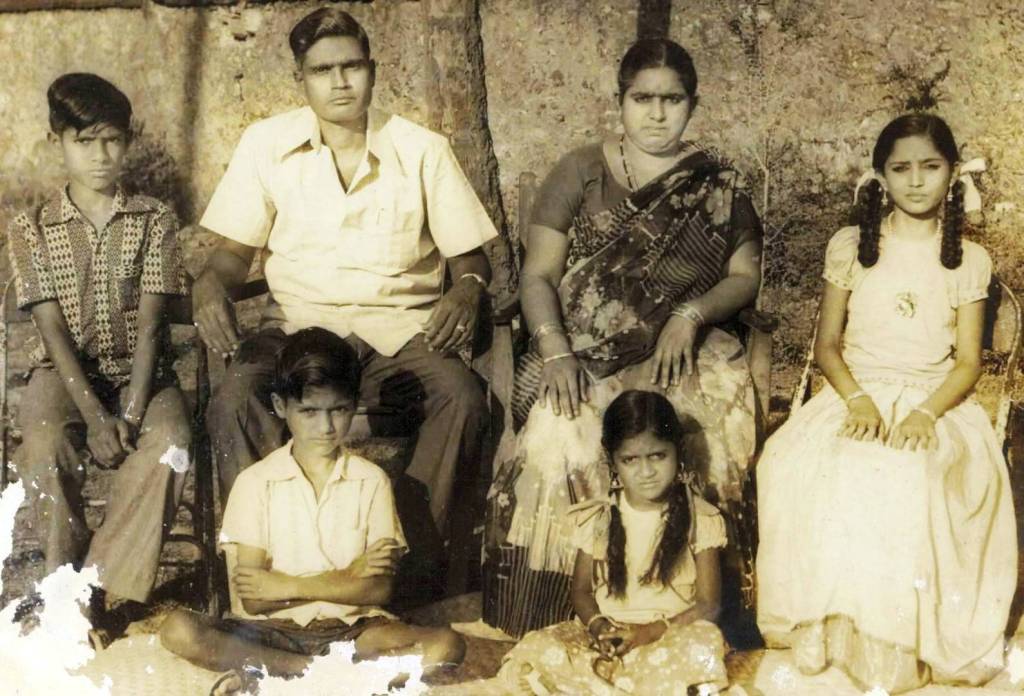
Auhtor’s Son Mr. Behara Satyanarayana Murthy
Fourth Story :
Nadeenaam saagarogathi
(नदीनां सागरो गतिः)
The Sanskrit saying means:
“Just as all rivers ultimately merge into the sea, all human beings, irrespective of caste or status, meet the same final destiny in death.”
It suggests unity beyond differences like caste, creed, or status. In the story, it symbolizes the breaking of untouchability and the triumph of human compassion.
On a scorching afternoon during the season of Rohini Karte, a young man collapsed and died on the roadside after uttering only the word “Venkata..”. The villagers guessed he was on his way to Venkanna Gudem. But when they discovered that he belonged to the Harijan community, they slowly moved away from the corpse, feeling polluted even by touching him.
The body was placed in a cattle shed, while the villagers hesitated over who would perform the last rites for an unknown “untouchable.”
At that moment, a doctor and his brother arrived. While the village elders remained reluctant, a group of young men courageously came forward to carry the corpse. Some orthodox men warned them to purify themselves afterward, since they had touched the dead body.
The doctor then spoke firmly to his father:
“If touching a corpse demands ritual bathing, then in my profession I must bathe every minute. I have pledged to serve humanity beyond caste, creed, or religion. All human bodies are alike. Cleanliness is for the body, not for empty rituals without purity of heart.”
He further declared:
“These funeral rites are not merely for this unfortunate man, but for the untouchability entrenched in our society.”
The funeral procession moved forward with the youth in front, and surprisingly, the village elders followed behind them. After the cremation, everyone bathed together in the pond.
Watching the elders themselves walk toward the cremation ground, Talari Ravuluo exclaimed with joy.
Their coming together was nothing short of a social revolution. Thus ends Behara’s moving story,
Nadeenam Sagar Gathi – a powerful statement on humanity triumphing over caste prejudice.
The joys and sorrows of middle-class life, its gentle smiles, humour, and wit are vividly reflected in his stories. He beautifully portrays the many shades and voices of the middle class — innocent people crushed by corruption and injustice, as well as those who knowingly step into corruption just to survive. His stories are so natural and life like that readers often find themselves reflected in them.
About His Kathasilpam:
Sri Behara’s language is lucid, natural, and highly colloquial.
His narration is gripping and keeps the reader eagerly moving from line to line.
He is especially adept at characterization, bringing out the emotions, attitudes, and inner conflicts of his characters through simple yet effective language.
🌹🌹🌹