[In this series, Dr. Chengalva Ramalakshmi and Mr. Boddapati Chandrasekhar introduce renowned Telugu short story writers.]


~
Story Writer, Essayist, and Critic Bhamidipati Gouri Shankar
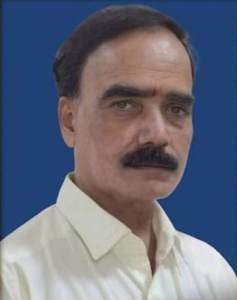

“At school, Nagabhushanam Master, and later in college, Telugu lecturer Ramanayya garu, introduced me to the world of literature. My elder uncle, Sri Dashika Rama Rao, himself a fine storyteller, provided the original story for the film ‘Undamma Bottu Pedatha’ Perhaps storytelling came to me as a hereditary treasure. That is why my interest extended not only to stories but also to film essays and criticism. Above all, I was fortunate to receive the guidance and suggestions of Sri Bharago at a young age.”
The Writers Who Influenced Him:
“Sri Kalipatnam Rama Rao, A. V. Reddy Sastry, Chalam, and Buchibabu are among my favorite writers. Their writings deeply influenced me. I am also greatly fond of Tilak, Sri Sri, and Alishetty. I can never forget Sri Rachana Sai garu, our Principal Dr. Pulakhandam Srinivasa Rao garu, and my friend Chandrasekhar, who became the driving forces behind my growth as a writer and my engagement with various literary themes.”
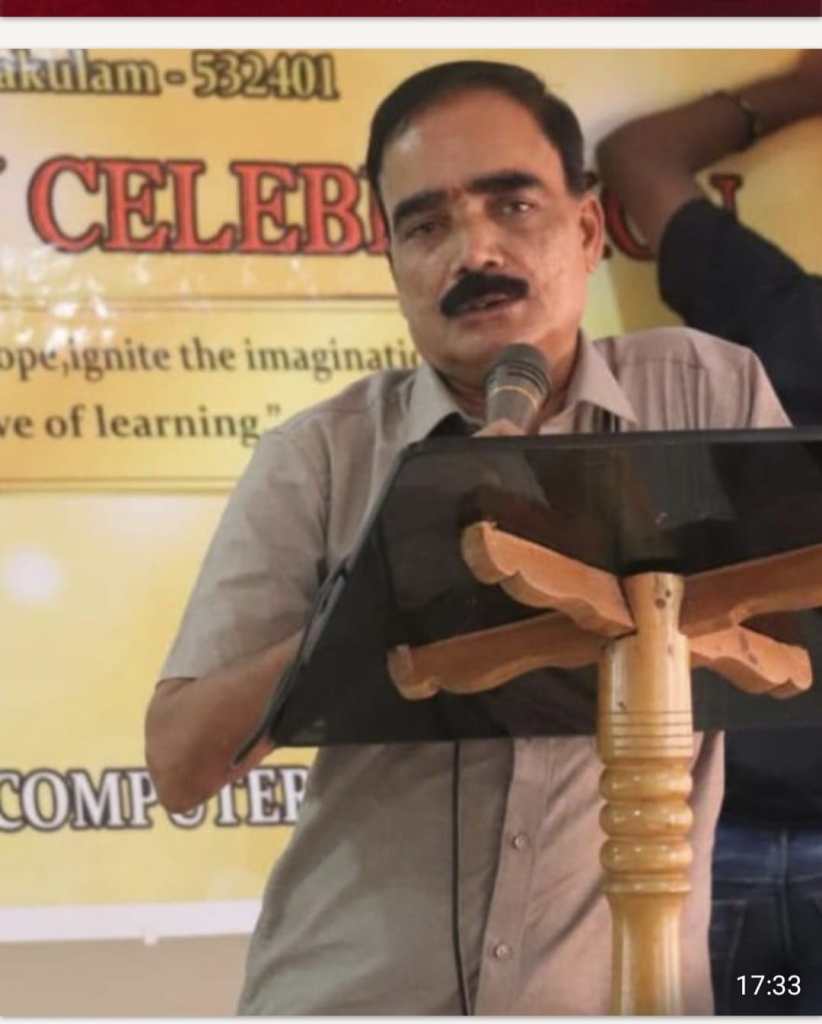

Early Life and Literary Influences
Born in Parvathipuram to Narsinga Rao and Annapurnamma, Sri Bhamidipati Gouri Shankar developed a deep love for literature from his childhood itself. Chandrasekhar, his friend, recognized his passion for reading and encouraged him further by his books and nurturing his literary interests. Inspired thus, he began writing stories and gradually emerged as a prolific storyteller, essayist and thought-provoking speaker.
As a Story Teller:
He has written around 170 stories.
His writings are marked primarily by a research-oriented perspective.
His writing style is simple yet impressive.
His short sentences keep the reader’s eyes moving swiftly. Very often, Sri Bhamidipati philosophizes on life and human nature.
It is indeed remarkable that two scholars have earned Ph.D. degrees and one an M.Phil. degree through research on his writings.
He has presented research papers at numerous literary seminars and conferences.
Let us know how he tells stories by examining some of his stories:


Short Story: 1
Hunger (Aakali)
A stark and haunting tale of brutal realism, Hunger portrays the terrifying extremes to which starvation can drive a human being. During devastating floods, a starving son kills a man in a desperate struggle for food packets dropped from a helicopter. Only the next morning does he discover the horrifying truth – the man he killed was his own father. Crushed by guilt, he quietly accepts his punishment.
The story is narrated in the first person by the son, now a prisoner. Remarkably, there are no loud cries of repentance or melodrama in his voice. Instead, there is a haunting calmness, as though he believes he deserves the punishment:
“This prison life feels strangely peaceful to me..
You may think I am mad for saying that prison gives me comfort.”
Very few writers can sustain such gripping intensity in a first-person narrative, and Gouri Shankar succeeds admirably.
Beyond its realism, the story also carries philosophical depth. Through the son’s reflections, the writer explores the subtle distinction between dharma and justice:
“When hunger strikes, even dog’s flesh may become food – that too is dharma.
Yet those who recite the Vedas say it is not justice.
Between justice and dharma lies an invisible, delicate veil.”
These reflections compel the reader to think deeply about morality under extreme human suffering.
The flood scenes are portrayed with painful realism – corpses everywhere, chaos all around, and hunger burning equally in the father and the son. The emotional turmoil within the son reaches its peak when another helicopter arrives:
“Cold.. hunger.. anger.. desperation..
Suddenly rage burst inside me.
I caught hold of someone’s throat and squeezed with all my strength..”
After devouring the food ravenously, he later realizes the unbearable truth. The final revelation is devastating:
“I know what I did was a crime.
My conscience knows it.”
The conclusion shakes the reader profoundly. The story reveals how hunger can strip away morality, compassion, and even human relationships, reducing man to helpless savagery.
Bhamidipati Gouri Shankar deserves heartfelt appreciation for crafting such a powerful and unforgettable story.
This masterpiece vividly portrays how hunger can totally incapacitate a human being, making them lose all sense of decency and relationships. Author Bhamidipati Gowrisankar deserves our highest praise. In Telugu literature, similar raw, realistic themes surrounding human survival and nature’s fury have been explored by legendary figures—such as Gudipati Venkata Chalam in Dora, Sri Sri in Kaaki, Chembu, Gomukku, and Rachakonda Viswanatha Sastri in *Adavi. Gowrisankar’s work stands proudly alongside these classic literary milestones.
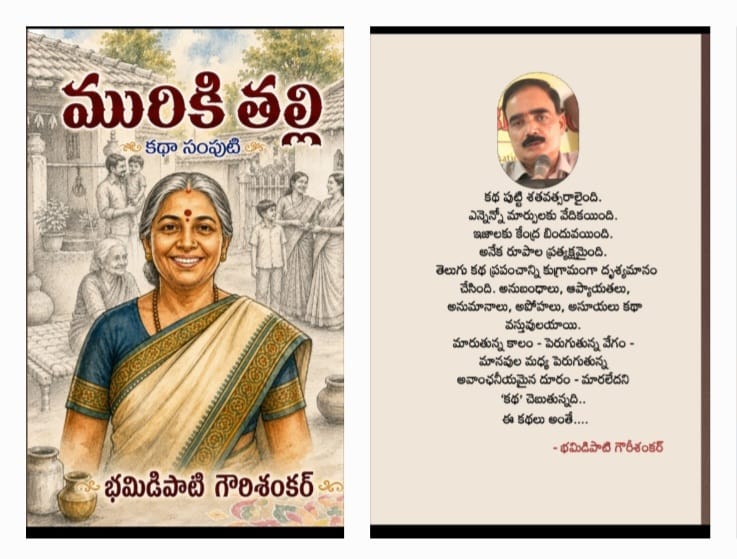

Short Story 2:
“Mamidi Jeedi” (The Mango Kernel)
*Introduction & Core Narrative
A journalist and a press photographer head out on an assignment given by their editor, leading them deep into the tribal agency areas of Srikakulam to a remote settlement named Chenchulaguda. There, they meet the inhabitants of Savaragudem. For the media team—and indeed for any modern reader—the lifestyle, traditions, and dietary habits of these indigenous people feel profoundly alien.
Living far removed from modern civilization, embraced entirely by raw nature, these tribes endure a miserable existence where even securing a basic meal is a daily battle. As for healthcare facilities, they are non-existent. This poignant story serves as an eye-opener regarding their plight. Rather than merely talking about its flavor, it is best to experience the story firsthand.
Thematic Contexts & Analysis*
*Context 1:
Right from the opening lines, the author grounds us in the core theme: “In this society, the wealthy and powerful claim they are creating riches.. politicians switch party allegiances claiming it is for the sake of the public.. even leaders rising from marginalized communities forget their roots the moment they taste power, spending their lives fighting for status and positions.” Writers often use their introductions to immediately alert readers to the underlying socio-political fabric of their subject matter.
*Context 2:
“They do not even know what processed, clean water is. When it rains, the mountain streams swell. They carry that water home, drop a clearing nut (Karakkaya) into it to settle the dirt, and drink it. For them, taking a bath is a luxury reserved for festivals.” Though this isolated lifestyle is an inheritance of their own, one cannot help but notice how brutally harsh it is. They are deprived of clean drinking water—the most fundamental prerequisite for human life.
Context 3: Survival and Adaptation*
The author’s description of their food is very nauseating.
“They served themselves a yellowish paste. It was an ambali (gruel) made by drying mango kernels and grinding them into flour.. When agriculture yields a few grains during the winter and rainy seasons, they eat that. Until then, it is just cakes made from mango-kernel powder.”*
Eating whatever food is locally available is a testament to human adaptability. Gowrisankar portrays these horrific living conditions vividly. By partially integrating the native Savara dialect, he educates the reader. His mention of legendary linguist Gidugu Ramamurthy, who rendered yeoman service to these tribes, highlights the author’s deeply research-oriented mind.


*Context 4:
Gowrisankar displays deep empathy toward the innocent Savara people. Their tragic cycle of life is starkly captured: “They live in the lap of nature, oblivious to what tomorrow brings. Even if they knew, what do they have to hoard? They dry mango kernels, pulverize them into food, and if it fails to sustain them, they simply die. With no medical aid within reach, death is inevitable. One must eat to live. But what if the very food you consume claims your life? How then do you survive?“
The author holds up a painful mirror to modern civilization: while our fellow human beings endure such a wretched existence, we, the self-proclaimed “civilized” elite, thoughtlessly dump expensive, gourmet food into trash cans during opulent celebrations. If our eyes do not open even after reading this, we have failed as humans; we possess no traces of humanity left within us.
*Context 5:
The story concludes beautifully yet hauntingly: “..The moon was large.. must be a full moon night.. preparing to pour out its radiance. Moonlight wasting away over a deserted forest.. But when will the moonlight of prosperity ever shine upon their lives?” The author succeeds completely in leaving his readers with a heavy, contemplative mind.

Short Story 3 :
“Vennela Needa” (The Shadow of Moonlight)
*Introduction & Core Narrative*
Rajeswari and Shobha are classmates and close friends hailing from affluent families. Shobha is characterized by absolute clarity of thought and conviction in her ideals. Rajeswari lacks both, struggling to find the courage to make independent decisions even in personal matters. Defying her family and confronting social taboos, Shobha marries Komaraiah – a man from a completely different social strata—and carves out her own path in life.
Conversely, Rajeswari fails to marry the cousin she loved and is wedded to someone else. Plagued by her husband’s incompetence, she endures severe financial hardships, raises two children, and manages to drag her life forward until her husband passes away. Years prior to this loss, a man named Joseph enters her life, offering her immense emotional and moral support. Now, with her children grown up and relocated for work, Joseph proposes that they live together (cohabitation). Caught in an agonizing dilemma, what choice does Rajeswari make?
Thematic Contexts & Analysis
**Context 1:
“Don’t overthink it.. come over for the holidays. Ever since I entered an inter-caste marriage with Komaraiah, all of you ostracized me. That was three decades ago.. Do you still harbor those old prejudices? I’m sure you don’t.. I know about Joseph, let’s sit down and talk, come over.” Rajeswari is stunned by this sudden phone call from Shobha. How did Shobha know everything about her current situation? She lapses into deep reflection.


*Context 2:
Describing Shobha, Gowrisankar writes: “A five-foot silhouette.. the very definition of unwavering calm and resolve.” When Shobha decides to marry Komaraiah, the author has her tell Rajeswari: “..I don’t think about any of those things. Komaraiah understands exactly who I am. I have no interest in conventional marriage, traditions, chants, and rituals.” She is a woman who knows precisely what she wants and has the conviction to execute it.
*Context 3:
While attending a seminar in Rajahmundry, Rajeswari notices an English lecturer named Vennela presenting a paper. Instantly, an inexplicable sense of familiarity washes over her—a sudden surge of maternal affection and love. Drawn by the girl’s warmth, Rajeswari cannot resist asking,
“Can you take me to your house? If it’s no trouble..” Vennela’s simplicity, articulate expression, and fearlessness strike Rajeswari as uniquely captivating.


*Context 4: The Power of Touch*
Upon reaching Vennela’s home, the truth dawns on Rajeswari: Vennela is Shobha’s daughter. Rajeswari’s joy knows no bounds. As the two women embrace, the author pens a magnificent line: “A silent embrace.. offering a thousand words of solace to a grieving heart.”
This is the magic that physical touch can create—a thrill experienced long before words cross the portals of our lips. A human touch communicates raw emotion, working wonders where language fails. It is the ultimate manifestation of non-verbal communication.

*Context 5:
Reflecting on the societal hardships and ostracization they faced due to their inter-caste marriage, Shobha shares a profound truth: “A marital life succeeds only when there is mutual respect for individual growth, personal evolution, and the unique ways love is expressed.” These words strike a deep chord within Rajeswari, making her realize what she missed in her own marriage, while shedding light on what she needs now.
When Rajeswari hesitantly brings up Joseph and seeks advice, Shobha tells her with immense wisdom: “Look, this is your life. We are in the twilight years. Whatever we choose to do now, we must ensure that we have a supportive hand to hold during our final journey.” This clears away the lingering clouds of doubt from Rajeswari’s mind, transforming her heavy, burdened heart into something as light as cotton.
The story concludes with the poignant observation:
“In a woman’s life, love is history.. regardless of the form it takes..”*
The mind of a young woman at the dawn of youth is like a tender bud; thoughts of a man, his attraction, and his touch cause her emotional petals to blossom until her mind belongs entirely to him. Attraction is the first step toward love. This bond of love can be a wondrous, peerless connection, or an inescapable snare. This is the profound truth tucked behind the author’s words.


~
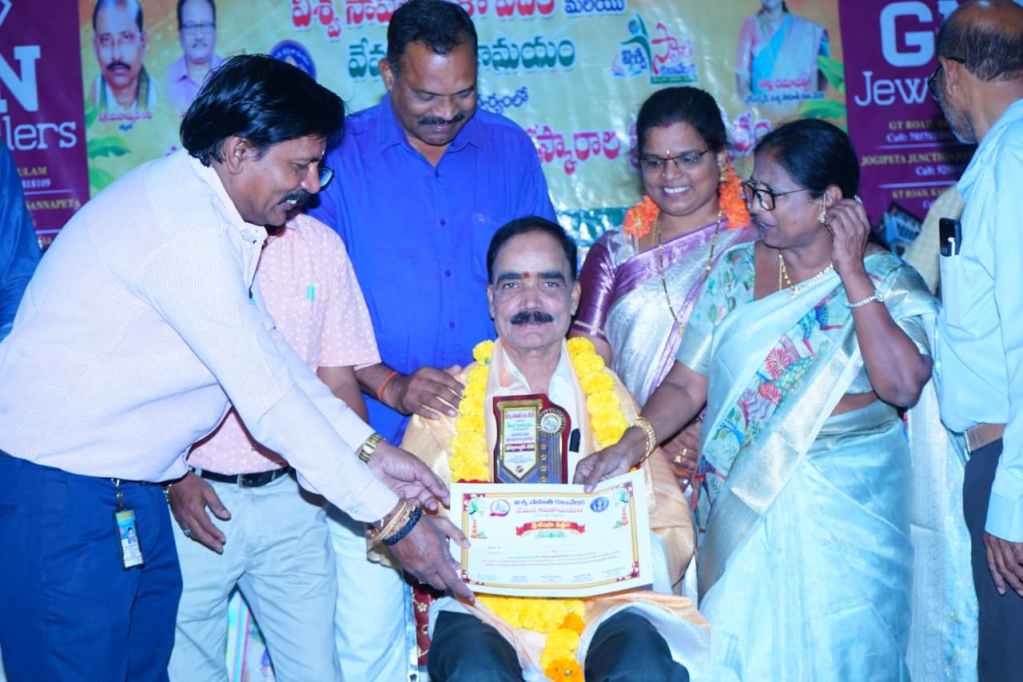
Notable Achievements of Bhamidipati Gouri Shankar
- Head of the Department of Telugu, Gayatri College of Science and Management
- Has published eight short story anthologies, four essay anthologies and one poetry anthology
- Nearly fifty of his stories have received awards so far
- Has presented papers at fifty international seminars and sixty national seminars
- Has participated as a resource person at several academic conferences
- Contributes to Pratibha and Antaryami of Eenadu
- Gives radio talks
- Textbook Writer for UG and PG Telugu Courses.


🌹🌹🌹