[In this series, Dr. Chengalva Ramalakshmi and Mr. Boddapati Chandrasekhar introduce renowned Telugu short story writers.]


~
A Life Bound To the Pen – P. Chandrasekhara Azad


This tireless and prolific writer, Chandrasekhara Azad, has contributed a major chunk to Telugu literature with his vast and impressive Literary Oeuvre.
His maiden story:
Azad wrote his first short story, ‘Nirudhyogi (Ātma) Hatya,’ for his college souvenir while studying in the first year of Intermediate in 1971. Since then, he has never looked back and has continued writing steadily. His literary output is amazing both in terms of quality and quantity.
Let’s learn Azad’s literary journey, capturing his passion for writing, his creative growth, and the milestones that shaped him into a distinguished storyteller.
Roots and Early Life:


A Literary Powerhouse (The Scale of Work)
Chandrasekhara Azad’s creative output is nothing short of breathtaking. He has acquired an impressive grip on the art of storytelling.
Not only this.
Through ever-new themes and bold literary experiments, he keeps unveiling new dimensions of his creative genius.
Just look at his Voluminous creative output.
- Fiction: 850 short stories, 90 novels, and 18 novellas.
- Philosophical Novels: Ahaniki Rangundadu (అహానికి రంగుండదు), Mano Prasthanam (మనో ప్రస్థానం—a novel exploring humanity’s desire to conquer physical death and the implications of the Genome Project; a TANA Novel Award winner), Mukti Parvam (ముక్తి పర్వం), Atanu–Yogi–Rolls Royce (అతను–యోగి–రోల్స్ రాయిస్), Devudu Edchadu (దేవుడు ఏడ్చాడు), Nagaramlo Vennela (నగరంలో వెన్నెల), Bhayam (భయం), The Road, Maneeshi (మనీషి), Eccentric people – (విపరీత వ్యక్తులు) and many more.
- A good number of Detective Stories.
- Screen & Airwaves: A staggering 5,000+ TV episodes, along with numerous radio plays, feature films, and telefilms.
- Stage & Children’s Literature: Stage plays, acting.
- Highly innovative, experimental work in children’s literature.
- Journalism & Leadership: 18 regular columns and successful management of various cultural organizations.
Literary Awards
Accolades & Recognition
When you write with that much passion, the world takes notice. His trophy cabinet is packed with prestigious honors from home and abroad:
The Crown Jewel: The prestigious Kendra Sahitya Akademi Award for his brilliant children’s novel, Maya Lokam.


Magazine & Global Honors: Over 100 of his short stories and 36 of his novels have won prizes in various magazines and from major Telugu diaspora organizations like ATA and TANA.
State & Academic Laurels: The Keerthi Puraskaram and the Story & Novel Process Award from Potti Sreeramulu Telugu University.
State Government Honors: The Kala Ratna (Hamsa) Puraskaram (2015) and the *Ugadi Puraskaram (2014) from the Government of Andhra Pradesh, alongside numerous personal milestone awards.


Cinematic & Television Triumphs (Nandi Awards)
Silver Screen: Two Nandi Awards for Best Screenplay and Best Dialogues.
Television: For his telefilms, he clinched three Golden Nandis and one Silver Nandi.
Children’s Cinema: A coveted Golden Nandi for his outstanding contribution to children’s film..


Evaluation of His Short Stories
That peacock.. and I
(నేనూ –ఆ నెమలి..)
The essence of the story:
The narrator received a peacock feather from a tribal priest (Konda Devara ) in his childhood. He kept it in a book and would often experience a thrill whenever he looked at it. Four decades passed, yet the peacock feather continued to linger in his mind.
Curiously, he had never seen a peacock in real life – only in films, sculptures, paintings, and books.
One day, at the invitation of a friend, he visited Horsley Hills. It was here that he came face to face with a peacock in flesh and blood.
Let us see how the writer captures the thrill, ecstasy, and rapturous wonder of beholding a peacock for the first time in real life.


CONTEXT 1:
His sentences are so short that they get memorised or etched in our hearts.
Just look at them.
“I have seen a peacock.”
“I haven’t seen a peacock.”
“I have seen it only in films, sculptures, paintings, and poetry.”
“Never in real life.”
Each sentence is short and unadorned. Yet, when placed one after another, they acquire a quiet emotional force. The simplicity is captivating. The narration advances in gentle steps, drawing the reader along and making the experience intensely personal and engaging.
The appeal lies in the brevity, simplicity, and cumulative emotional effect of the sentences. Each short sentence adds a layer of meaning, creating a conversational intimacy with the reader. The style is indeed engaging, but more specifically it may be called..
- Deceptively Simple Narration.
- .
- Highly Economical Story Telling.

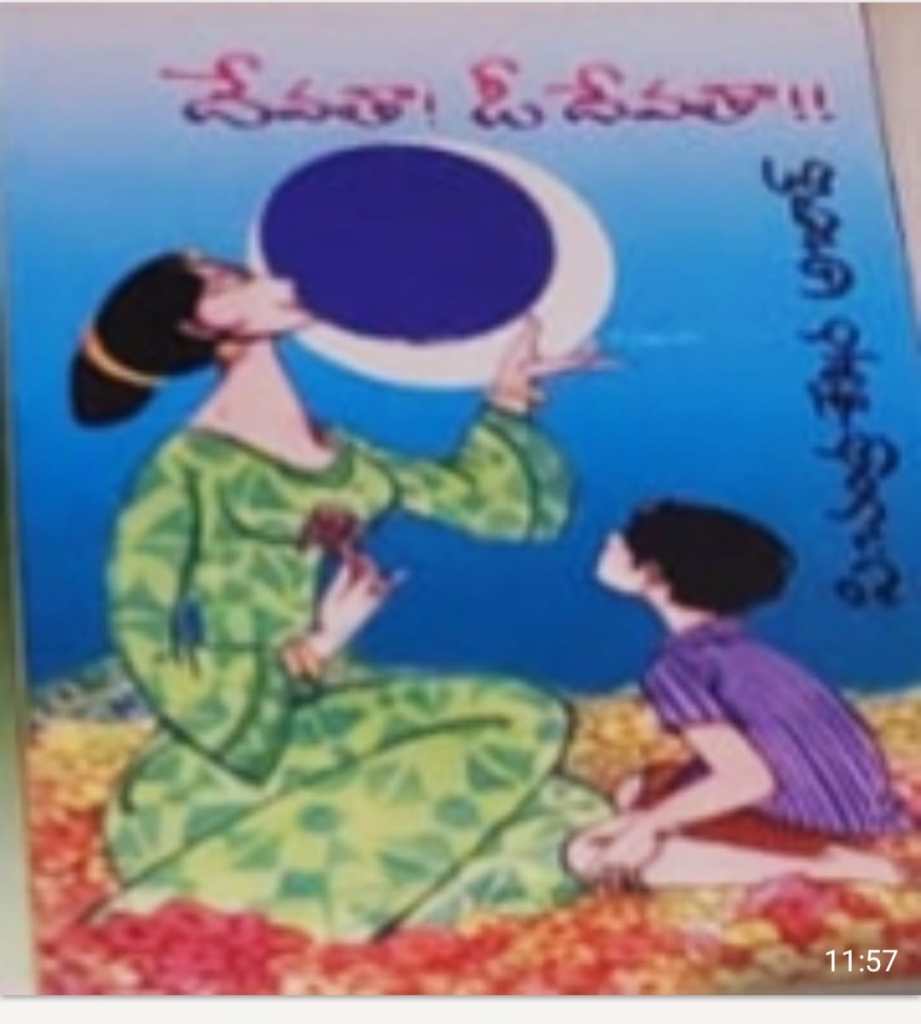
CONTEXT 2:
Suddenly, the narrator’s gaze was arrested by a captivating sight.
A couple of rabbits, a deer, and amidst them, a peacock.
Almost involuntarily, he drifted towards the scene.
The cool breeze seemed to intoxicate the peacock. In a sudden burst of ecstasy, it unfurled its magnificent plumage and began to dance.
The rain came down in torrents. Thunder rolled across the sky. Lightning flashed.
A quick run would have taken him safely to the guest house.
But the peacock held him spellbound.
It was a vision beyond description, beyond words.
If I ran, I would reach the Guest House in two minutes.
Then came a deafening clap of thunder.
A blazing wave, as though charged with thousands of volts of electricity, streaked across the landscape, scorching the trees in its path. Like a ribbon of red fire, it rushed forward and came to a halt barely a foot and a half in front of me.
Stunned and shaken, I turned towards the peacock.
It was still immersed in its dance.
Had the peacock not detained me there..!


Comment:
This is far more than a description of a dancing peacock. The bird becomes an instrument of destiny. Entranced by its beauty, the narrator lingers for a few precious moments—moments that save his life. Had he hurried towards the guest house, he might have been caught in the path of the lightning.
The peacock thus symbolizes the mysterious ways in which grace operates. What appears to be a simple encounter with beauty turns out to be an act of protection. The dance of the peacock becomes a reminder that unseen forces sometimes guide and preserve us in ways we can understand only afterwards.
CONTEXT 3:
The story’s conclusion carries profound symbolic significance.
Taking the peacock feather from the book, I stood in the open meadow. As a gentle breeze caressed me, I released it into the air.
It floated away, soaring and dancing with the wind.
I felt no sorrow at losing the feather.
For the peacock itself lives on in my heart.
Comment:
The conclusion transforms a cherished object into a cherished memory. The narrator no longer needs the peacock feather as a physical keepsake, for the experience it symbolizes has become an inseparable part of his inner life. The feather drifts away, but the wonder, gratitude, and enchantment associated with the peacock remain forever etched in his heart. This graceful ending elevates a simple incident into a lasting meditation on memory and transcendence.
Look at the last sentence.
It is I who ought to unfurl the raptures of my heart and dance.
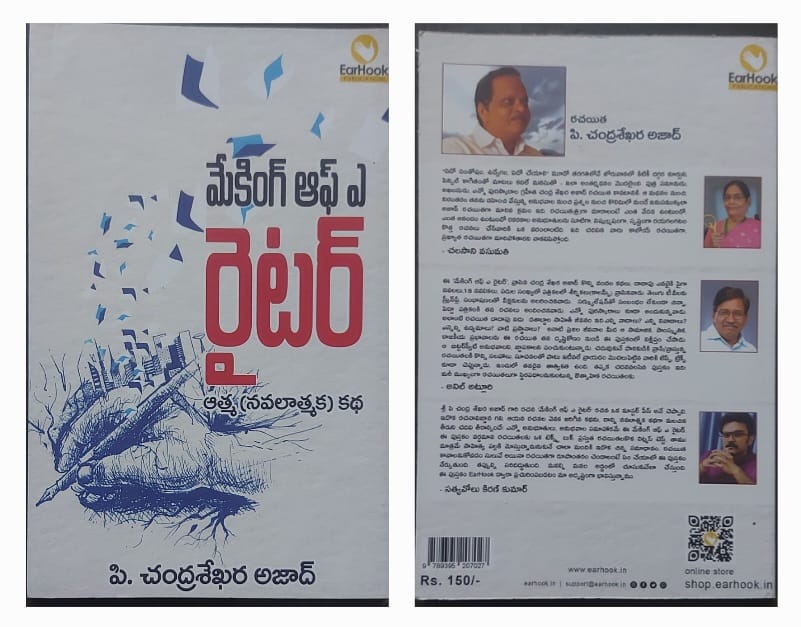

Comment:
The wonder, ecstasy, and joy the narrator experienced while beholding the peacock’s dance remained, as it were, an unfurled plumage in the valleys of his heart. When the gentle breeze called memory touches the door to that marvellous scene, the peacock, in all its splendour, appears upon the screen of his mind.
Is not celebrating life nothing but living it lightly and rejoicing in its simple joys?
The story attains a deeper significance in its final sentence:
Perhaps this is what sages, Vedantins, seekers, and explorers of the inner world have ceaselessly sought: a state in which the heart responds to existence with wonder, gratitude, and joyous participation. In that sense, the narrator’s exclamation is not merely about a peacock; it is about the art of truly living.
STORY 2:
GOD IS DEAD.
(దేవుడు చచ్చి పోయాడు..)
Don’t curse Chandrasekhara Azad, the writer of this story.
Don’t vent all your anger on him.
Don’t call him names.
Before questioning his courage and daring for choosing such a provocative title and writing a story on this theme, calmly and patiently follow the arguments – the three discussions he presents in the story.
Examine them carefully.
Judge their validity.
CONTEXT 1:
Look at the beginning of the story..
“God is dead..
The world suddenly startled.
Don’t know who said this.
Like a wild fire it enveloped the country and world too.’’
The story opens with a startling proclamation – “God is dead.” The statement reverberates across the world like wildfire, shocking humanity and setting the stage for a profound exploration of faith, belief, and the consequences of challenging established certainties.
The world’s startled reaction suggests humanity’s dependence on long-held beliefs and the turmoil that arises when those beliefs are challenged.
With a remarkable economy of expression, Chandrasekhara Azad creates an atmosphere of curiosity and tension.
The readers are immediately drawn into a philosophical inquiry, compelling them to ask not whether God has died, but what such a declaration means for humanity.


CONTEXT 2:
Discussion 1:
This reveals the steadfast faith of the people in God’s existence. Their argument is very strong and effective.
To refute the very idea, the believers put forward many established భావనలు about God. The writer gives counter arguments also. This only in fact strengthens the Unwavering faith in God.
Follow these..
God is self-existent. He did not create Himself merely to die.
If we look into our Puranas or study other religious scriptures, we do find accounts of the deaths of divine incarnations—Rama, Krishna, and others.
But if God were truly dead, what do you think this world would be like? Creation can continue even without the idea of God.
And tell me, what evidence do you have that God is dead?
When human beings, animals, or trees die, we see their corpses. Is there any such evidence here?
Then again, what evidence do you have that God exists?
Are you an atheist?”
“No, I am not. But these are the kinds of questions people ask.”


COMMENT:
The core of the debate lies in the question of evidence and belief. If one claims that God is dead, one must provide proof. Yet, if one claims that God exists, that too demands proof. The discussion therefore moves beyond theology into epistemology – the nature and limits of human knowledge. Rather than affirming either faith or atheism, the dialogue exposes the difficulty of proving or disproving the existence of God and invites readers to reflect on the foundations of their own beliefs.
CONTEXT 2:
Discussion 2:
“This goes against our religious belief.
The gods of other faiths may die, but our God remains alive.
They killed our God, but He was resurrected.
Our God keeps returning.
He is born again and again.”
See the faith-filled words.
CONTEXT 3:
Discussion 3:
“Whoever may be behind this propaganda, it has at least given people a valuable opportunity.
This world is not an illusion; it is material and tangible.
Who created it?
What we call nature or creation – isn’t that what we are talking about?
Who created it?”
“Certainly not God. Nature does not need a creator.”
“Then do you call it a force?”
“Yes, a force inherent in nature itself.”
“And what is that force?”
“A chemical process.”
“Can such a force die?”
“Perhaps it can.”
Brief Comment
This debate shifts the focus from theology to a materialistic understanding of existence. The speaker challenges the notion of divine creation, arguing that nature and its inherent forces may be sufficient to explain the universe. More than a discussion of evolution, it is an exploration of naturalism, causation, and the possibility that creation may not require a creator.


Consequences:
Devastated by the viral proclamation that “God is dead,” many people were shattered. Some even took their own lives.
Others felt that, whether God was already dead or destined to die in the future, what truly mattered were human comforts, pleasures, and happiness. Life, they argued, should continue as usual, unaffected by such speculations.
Yet the writer’s hawk-eyed observation does not overlook another group—the architects of nuclear destruction. Their curiosity and excitement at the prospect of testing their catastrophic power reveal a chilling mindset.
The following words capture their sinister thoughts:
“If God is dead and the end of the world is near, why not partially detonate our nuclear bombs and witness the apocalypse before the next generation does?”
How should one describe such a line of thinking?
Morbid Curiosity?
Inhumanity?
Sadistic pleasure?
The choice is yours.


Conclusion
“The experiments conducted so far – whether by Creation itself or by God – are enough. Through the various arguments presented in the story, two opposing camps ultimately succeed in evoking the feeling that these are all divine plays, cosmic games, and mysteries beyond human comprehension.
Yet, whether it is humanity, God, or Creation, there is always an urge to discover something new, to transcend the existing order.
This time, however, the aspiration is different. The new creation should be free from the flaws, divisions, inequalities, castes, and social hierarchies that have plagued the present world. It should usher in new worlds founded on justice, equality, and human dignity. ‘’
This conclusion reveals not merely the writer’s optimism but his lofty humanistic vision. It is a dream of a better world – a world liberated from caste, creed, religious divisions, and social discrimination. The closing lines unmistakably reflect the author’s conception of God and Creation, while also revealing a distinct inclination towards egalitarian and socialist ideals.
To the best of my knowledge, Chandrasekhara Azad is among the very few writers, if not the only one, to have explored this theme at such length and with such intellectual courage.
Readers are deeply impressed by the story’s arresting opening, its three stages of debate, the examination of consequences, and its thought-provoking conclusion.
*What stands out most is Azad’s remarkable ability to handle a razor’s-edge theme. He ventures into territory that could easily provoke controversy, yet he does so with extraordinary skill, tact, and balance. Without hurting sentiments, without compromising his artistic freedom, he conducts a fascinating narrative engagement that is both provocative and insightful.


**Now, dear readers, would you not agree that Chandrasekhara Azad possesses a rare gift for taking up delicate and contentious subjects and transforming them into compelling works of fiction through his literary dexterity, intellectual courage, and narrative craftsmanship?
**Undoubtedly, Chandrasekhara Azad is a writer with a rare distinction. He is a master charioteer who can spectacularly ride the five-horsed chariot of short-story writing.
🌹🌹🌹