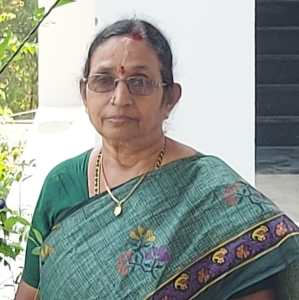
[In this series, Dr. Chengalva Ramalakshmi and Mr. Boddapati Chandrasekhar introduce renowned Telugu short story writers.]


~
P. V. B. Srirama Murthy – A Distinguished Craftsman of the Short Story:
P. V. B. Srirama Murthy (15 April 1951 – 9 February 2025)
Creative writing demands, above all, originality. It must be supported by sincere effort, keen observation of life, and the ability to choose diverse themes. A writer should be able to explore the depths of the subject he chooses. He must understand the appropriateness of the theme, the psychology and emotions of his characters, and distinguish between what is right and wrong. Their expressions, behaviour, and speech should come alive naturally. Above all, a writer should know how to narrate a story in a way that keeps readers engaged. This is just the art of storytelling.
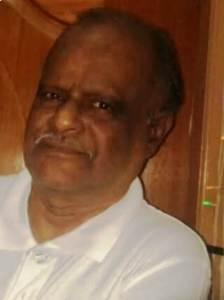

The harmonious blend of all these elements constitutes true literary craftsmanship. One such accomplished storyteller is Sri P. V. B. Srirama Murthy, who enriched Telugu literature for more than five decades.
Born on 15 April 1951 at Ranasthalam in Srikakulam district, he was the third of eight children born to Sri Ramarao and Smt. Lakshmi Narayanamma. His father was a schoolteacher. He studied at Cheepurupalli, Konuru, and Mettupalli before pursuing higher education at Maharaja Sanskrit College, Vizianagaram, and Andhra University. After completing his Pandit Training, he joined the RCM Boys’ High School, Parvathipuram, as a Telugu Pandit in 1972 and served there with distinction until his retirement in 2008.
Beginning his literary journey at the age of seventeen, he went on writing nearly 400 short stories. His collection Mullu (Thorns) was published in 2000. A volume of humorous and satirical stories appeared in 2008. After nearly fifteen years, he brought out another collection titled Aranya Rodanam (Cry of the Forest) in 2020, containing thirty-eight stories.
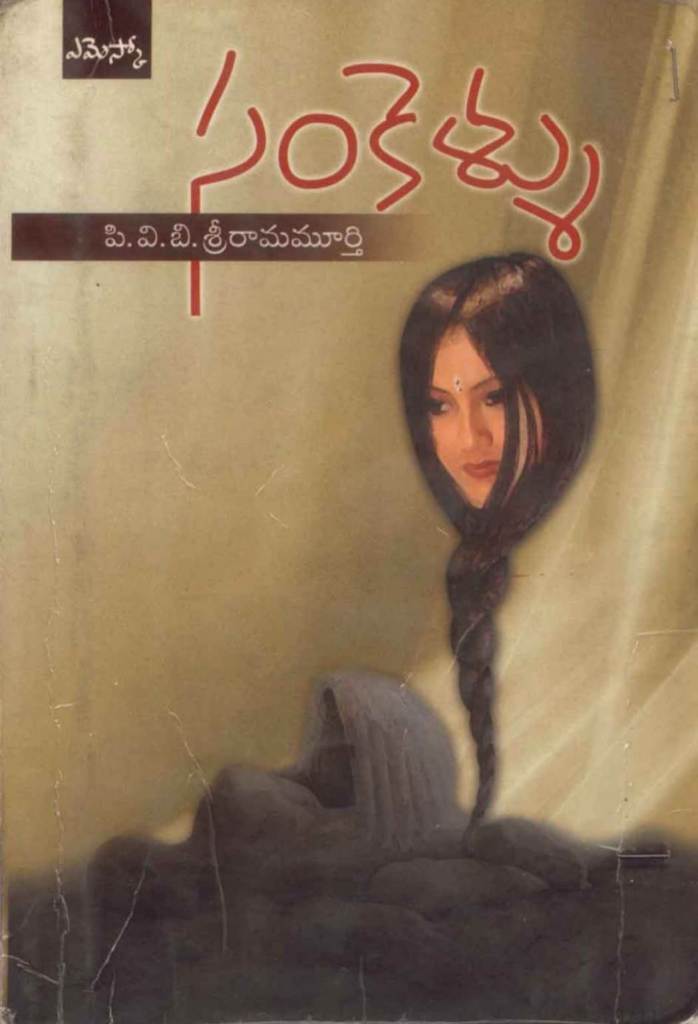
Srirama Murthy also wrote novels titled Prema Sutram, Jebulo Bomma, Ido Yagnam, and Neram–Siksha and Sankellu (Chains).
He penned stories for children. He contributed inspiring spiritual essays to the popular ‘Antaryami’ column in the Eenadu daily.
Three of his stories – Mullu, Sorajyam Tata, and Punadiraallu – were translated into Hindi by Smt. Inuganti Janaki and published in the Hindi journals Sutra and Sarvanam.
His literary excellence received due recognition. In 2021, the Abhinandana Society, Vizianagaram, honoured him with the Best Writer Award. His collection ‘Aranya Rodanam’ also received an award from Srujana Sahiti, Chittoor, apart from several other honours.

Ramalakshmi and Chandrasekhar, the writers of this feature adapted his story Simmaadri for All India Radio, Visakhapatnam, which was broadcast a couple of years ago.
Srirama Murthy also excelled as a theatre director. He wrote and staged plays for schoolchildren and personally performed more than fifty times as Nakshatraka in the celebrated play Satya Harischandra. He was equally admired for portraying Lord Krishna on stage. Blessed with a melodious voice, he captivated audiences wherever he performed.
For twenty-five years, he served as the Secretary of Mitra Sahiti, Parvathipuram, where he organised and promoted a variety of literary programmes.
Speaking about his literary journey, he once said:
“The world around me made me a writer. I carefully observe people’s speech and behaviour, and from those observations I develop my story ideas. I admire the poetic craftsmanship of Tikkana, Pothana, and Vemana, and the reformist spirit of Kandukuri Veeresalingam. I have a special fondness for Ravi Sastry. I do not subscribe to any ideology except Humanism. A writer must have individuality, courage to speak the truth, honesty, and commitment.”
He was an avid reader of Premchand, Rabindranath Tagore, and Sarat Chandra Chattopadhyay. Inspired by Andhra Prabha, Andhra Patrika, and the leading weeklies of his time, he nurtured his passion for writing.
Recalling his childhood, he said:
“My grandmother was a treasure-house of stories. Every day she gathered us around and narrated a new story without repeating the previous one. That awakened my desire to become a storyteller. My elder brother and I first tried writing novels, but they were never published. My first short story.. Papam Sailaja.. appeared in Krishna Patrika. Since then, I have continued writing stories.”
His stories won readers’ hearts not merely because of their number but because of their literary quality. With varied themes, convincing characterisation, meaningful dialogue, and the restrained use of regional dialects, he established himself as a master craftsman of the short story. His works have even become the subject of doctoral research.
Anyone who reads his stories will recognise him as a keen researcher, a perceptive observer of society, an insightful analyst, a thoughtful critic, an experienced writer, and a responsible intellectual committed to a better future.
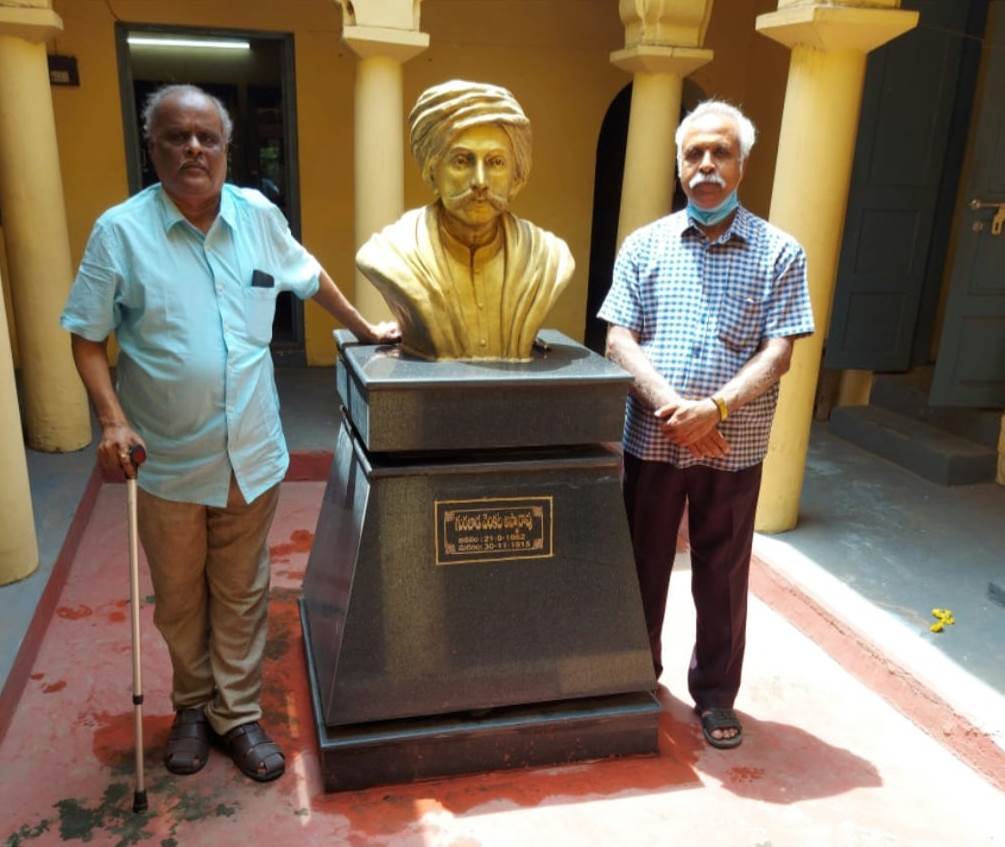

His short story Bhiksha earned high praise from the legendary storyteller KaRa. Another story, Avunu Nenu Banisane (Yes, I Am a Slave), moved a District and Sessions Judge to personally telephone the author and say:
“This story compels one to think. It takes great courage to write on such a theme. My heartfelt congratulations.”
His novel Sankellu was warmly appreciated by Chalasaniprasada Rao. His story Nippu Puvvu, published in Vijaya magazine edited by Vijaya Bapineedu, not only earned him the writer’s remuneration but was also voted by readers as one of the magazine’s most popular stories, winning him an additional cash award.
“I will continue writing stories as long as I breathe,” he once declared.
True to that promise, P. V. B. Srirama Murthy remained a dedicated storyteller throughout his life. He continues to inspire young writers with his commitment, integrity, and enduring contribution to Telugu literature.
Let’s know his KATHASILPAM or TECHNIQUE by analysing some of his stories from “Aranyarodanam” Story Collection.
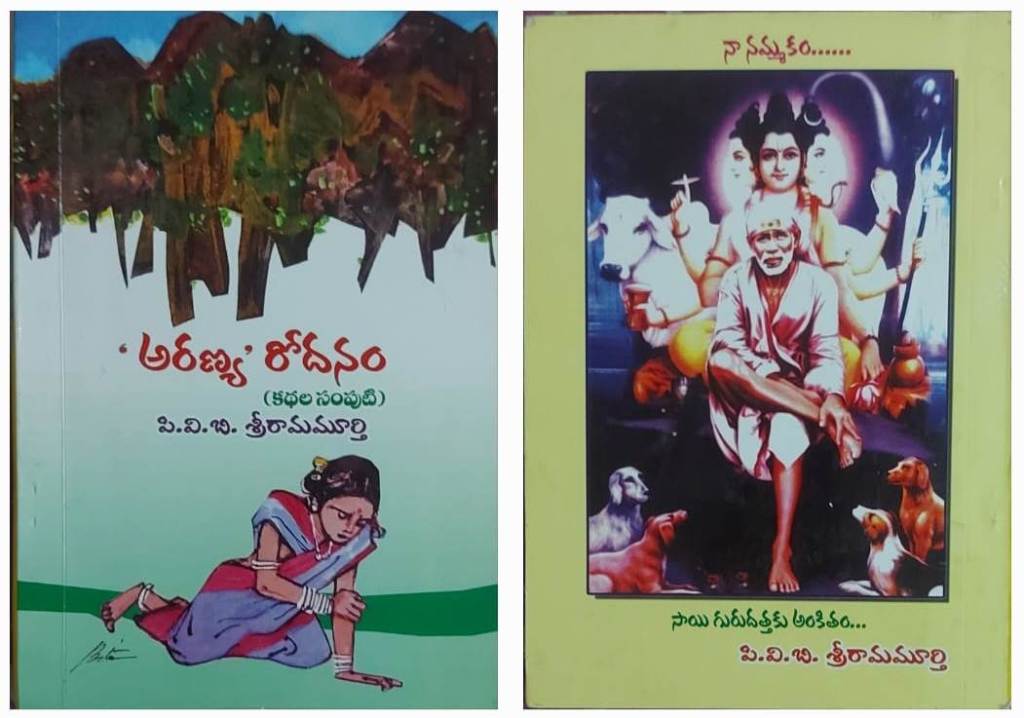

This renowned collection features 38 stories originally published in prominent literary magazines. Carefully curated by the author, the volume brings together tales that deeply resonated with readers, won critical acclaim, and held the author’s own affection. Every story possesses a compelling momentum. Let us explore some of the standout pieces:
1. Aranyarodanam (The Cry in the Wilderness)
As the titular opening piece, this story earned immense acclaim. It showcases the author’s profound lived experience and sharp observational eye, reflecting the deep currents of society. It is a powerful narrative depicting the exploitation, raids, and plunder faced by the Savara tribal community living amidst the hills.
The Setting and Conflict:
The remote village of Kimidiguda often served as a safe haven for rebel Annalu (Naxalites), drawing constant police surveillance. Amidst this tense backdrop, predatory landlords like Kondayya and his son, Dharmaraju, ruthlessly exploit the labor, wealth, and dignity of the Savaras, leaving the tribals to lead lives gripped by perpetual fear.
The Climax:
During the festive celebration of Kattalla Panduga (the festival of knives), the embodiment of vice, Dharmaraju, violates Malli – the tender, flower-bud-like daughter of the Savara elder, Samba. The story captures this horrific act, alongside a subsequent police raid, through evocative, vivid word-pictures.
Layered Significance:
On the surface, it is a localized tale of a Savara family. On a deeper level, it encapsulates the multi-layered tragedy of the region: predatory landlords, revolutionaries, police crackdowns, and wild animal threats. It forces readers to ask: Is this merely the story of terrified tribals living hand-to-mouth, or is it a profound reflection on family, society, and an oppressive system as a whole?
Social Consciousness:
Genuine social awareness does not feel pasted on; it organically arises when an authentic plot demands it. P.V.B. Sriramurthy achieves precisely this. While true social consciousness cannot be artificially manufactured, a reflective writer naturally touches upon societal dimensions when they are inherent to the subject matter. Viewed through this lens, it stands as a masterpiece.
Notable Metaphors & Similes
The author has a distinct penchant for fresh, vivid comparisons infused with local idioms:
Houses scattered across the hills looked like food packets airdropped from a helicopter during a storm.
Like a fox wandering into a strange village upon seeing a city dweller.
Elephants strayed across from the forests of Odisha.
Mist-covered hills resembled woven leaf-baskets filled with leafy greens.
As the landlord galloped ahead, his mind fluttered like a flag in a high wind.
Shivering in the mountain cold, the people curled up together like rows of unpeeled bananas nestled in straw inside a bamboo basket.
As midnight struck, the mountain seemed smeared in tar, with nightjars crying in the dark.
He floated in a pool of blood like a dead fingerling.
The approaching harvest was utterly devastated.
Devotees pacing sleeplessly through the night… and many more.
2. Amma, Nennu Aa Badike Vellana? (Mother, Must I Go Back to That School?)
The story opens with Paramma waking her son Suri, who is reluctant to get out of bed despite school time. Initially, starting school with fresh clothes and a new bag felt exciting. However, Suri soon grew deeply troubled. By the second year, while other children wore brand-new uniforms, Suri was tormented by the laughter he faced over the patch in the middle of his shorts. He could no longer bear the punishments handed out by the teacher for arriving late.
Though it was a government school offering free education and rice to incentivize attendance – making his father, Narsingu, deeply anxious for him to study—Suri learned nothing in two years while his peers migrated to private convents. This gulf filled Suri with utter aversion toward the school.
The author captures the inner turmoil of a fragile child’s mind with exquisite sensitivity, vividly mirroring the state of government schools and examination systems of that era.
“Mother, must I go to that school?” As Suri pours his heart out to his mother, yearning to be enrolled in the Sri Venkateswara Convent so he can study properly, the narrative draws to a close.
Noted writer Sri Bairagi deeply praised this piece. When literature makes us physically feel society’s harsh truths and stirs deep introspection, it undeniably earns the mantle of greatness—an experience this story delivers effortlessly.
3. Hammayya, Devudu Bajjunnadu (Thank God, God is Asleep)
This poignant tale explores the vital roles of mother, father, and teacher. When 500 rupees go missing in a classroom, the teacher leads the children outside, asking them one by one to slip the stolen money back into a designated spot, warning that those who lie – or whose parents lie – will incur the wrath of God.
This warning deeply disturbs a young boy’s mind. Returning home, he overhears his own father accepting a bribe to deliver an unjust verdict, and then flatly lying about it when confronted. The revelation shatters the boy’s innocent world, plunging him into a storm of anxiety that robs him of sleep and appetite.
Noticing his distress, his mother gently coaxes out the truth and puts him to sleep with profound wisdom. The words she utters to comfort him are meant not just for the child, but for all of us and society at large. In this moment, the author emerges as an exceptional psychologist. Without undermining the child’s respect for his father, she gently explains that while people may stumble:
“You must never do wrong, nor must you ever lie. Only then will God be pleased and bless you with all that is good.”
As the boy finally drifts off to sleep, the mother is left awake, burdened with sorrow. The story’s striking conclusion invites deep debate and introspection:
“While these innocent children – these little gods – sleep, are the elders, sunken deep in the swamp of falsehood and corruption, even thinking?”
These words strike like bullets, shaking the very foundations of the system. Through this tale, Sri P.V.B. Sriramurthy reveals himself not merely as a writer, but as a researcher, analyst, critic, veteran observer, and a responsible intellectual yearning for a better future for generations to come.

Legacy & Critical Acclaim
Sri P. V. B. Srirama Murthy passed away on 9 February 2025, leaving behind a rich literary legacy.
🌹🌹🌹