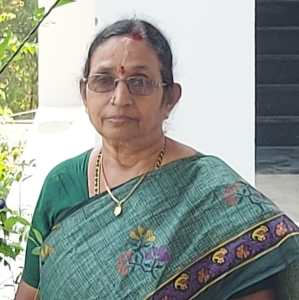
[In this series, Dr. Chengalva Ramalakshmi and Mr. Boddapati Chandrasekhar introduce renowned Telugu short story writers.]


~
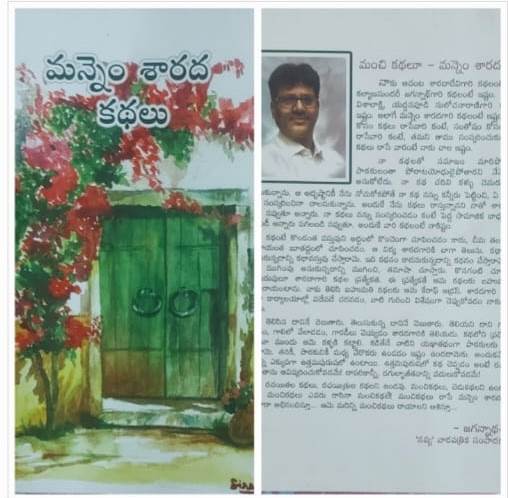
Mannem Sarada: A Masterful Narrator:


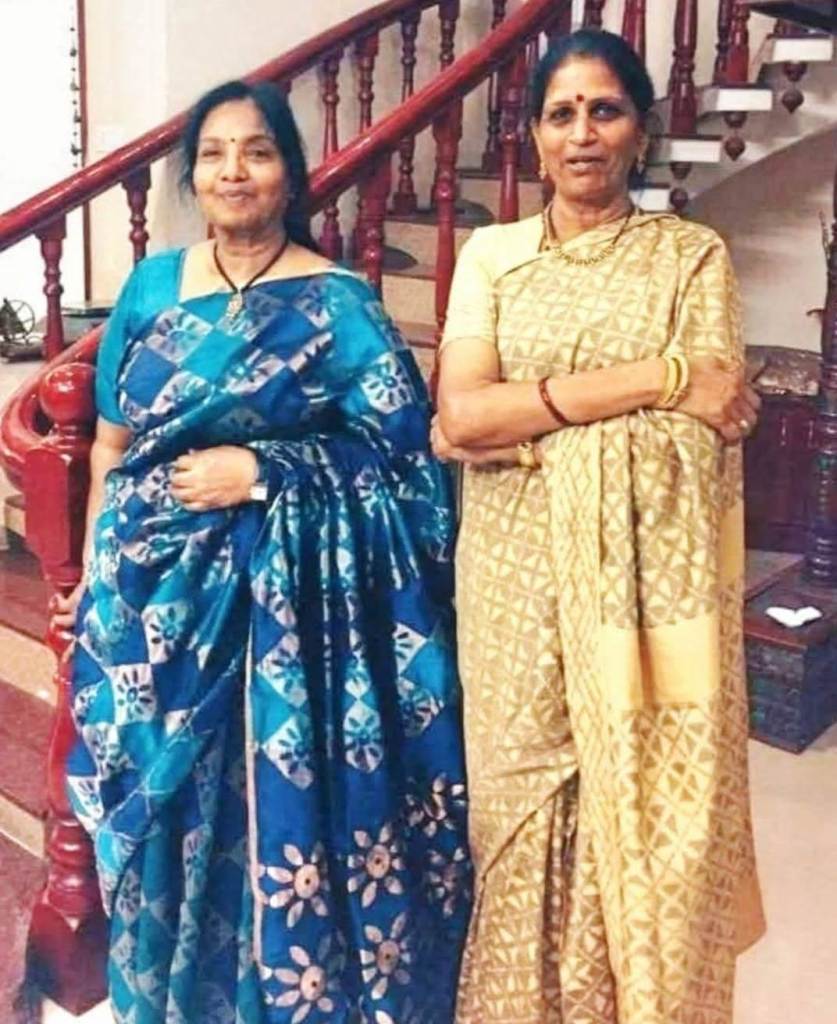
This is how Ms. Mannem Sarada introduces herself.
Her Literary Journey
It began at the age of seven with a short play, Mantri Chesina Droham (The Minister’s Betrayal), followed at eleven by a detective novel, Pagabattina Paduchu. Her first published short story, Adavi Gulabi, appeared in Andhra Jyothi Weekly, followed by Roopasi – Room No. 7 in the same magazine.
Her first novel, Gauthami, won the First Prize in the Andhra Jyothi Deepavali Novel Competition. Her second, Chandrodayam, received the Second Prize in its Dasara Novel Competition, while her third, Pilupu Nee Kosame, a thriller, won the only prize in another Andhra Jyothi Weekly novel competition.
Her stories have appeared in almost all leading Telugu magazines and won numerous awards. Her widely acclaimed novel Sister.. Sister, based on interviews with nurses, explored their social, economic, and professional challenges. It was translated into Kannada and earned her honours at several nursing capping ceremonies.
Her Literary Output


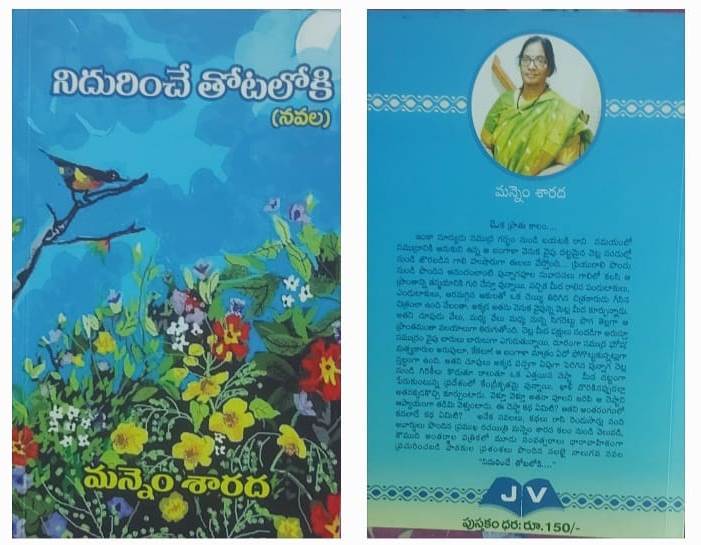
Among all her novels, Twinkle Twinkle Little Star, which was serialised in the Udayam daily, remains her personal favourite.The Week magazine described her as the “Girl with the Golden Pen.”
TV Serials and Awards
The television serial Premisthe Pellavutundaa!?, for which she wrote the story and dialogues, won 11 Nandi Awards. She also wrote the stories and dialogues for 13 episodes of Swathi Chinukulu, produced by Manjula Naidu and telecast on Doordarshan, for which she received a Nandi Award.
She was honoured with a Life Achievement Award by Smt. Amrutha Latha, an educationist and patron of art and literature.
She also received another Life Achievement Award from the APTA Cultural Organisation in the USA during the centenary celebrations of the legendary actor S. V. Ranga Rao.
Her last novel is Mana Katha Nijam Kada!?


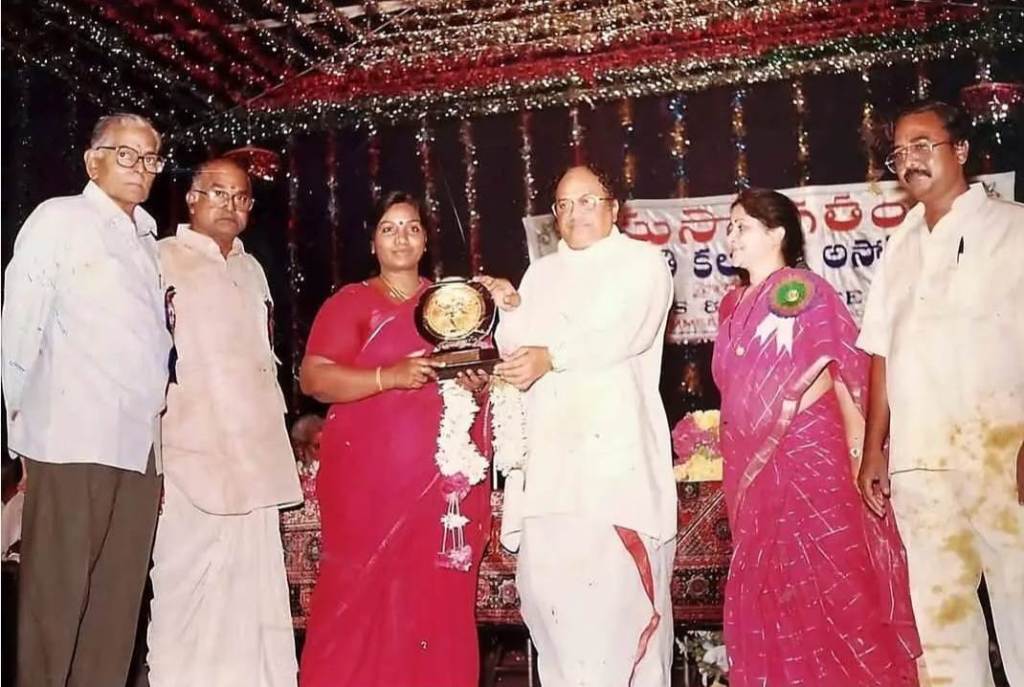
She received the Best Writer Award at Potti Sreeramulu Telugu University, presented by the Jnanpith Award recipient, Dr. C. Narayana Reddy.

Radio Plays
Many of her stories and radio plays have been broadcast by All India Radio, Hyderabad.
Her Gratitude
She remains deeply grateful to Sri Puranam Subrahmanya Sharma, who encouraged her throughout her literary career. She also remembers with gratitude Sri Ganesh Patro, who blessed her with the words that she would one day become a good writer.
There is hardly a Telugu magazine in which her writings or interviews have not appeared. She sincerely acknowledges all the editors who encouraged and supported her over the years.
“At present I am enjoying a relaxed phase of life, spending my time on one of my favourite hobbies – drawing and painting.
My heartfelt thanks to everyone who has been a part of my literary journey.” says she humbly.

Her Katha Silpam or Technique
Story Title: Grandfather’s Photograph
Context 1
“The moment I entered the hall, I was startled. The reason was the life-sized portrait fixed to the wall. The majesty of the man seated on that throne-like chair, the beauty within that majesty, the arrogance behind that beauty, and the pride hidden in that smile—all together left me stunned.”
Born and brought up in America, twenty-three-year-old Sharmila comes to India and visits her grandfather’s ancestral mansion for the first time. The imposing portrait hanging in the spacious hall leaves her speechless.
Commentary
Mannem Sarada’s description of the portrait is remarkably concise yet immensely powerful. The expressions “the arrogance behind the beauty” and “the pride hidden in the smile” instantly reveal the dominant traits of the man even before he appears in the story.
It gradually becomes evident that many women became victims of his arrogance, vanity and lust. Ultimately, only two women remain as living corpses—the lawful wife and the woman with whom he maintained an illicit relationship.
Context 2
“That must be Shammu – Sharmila, I suppose. Take her inside,” came a deep voice from upstairs.
The very man from the portrait was now standing upstairs, leaning against the railing.
Grandmother exclaimed in surprise,
“Is.. is this Indu’s daughter? Did you already know she was coming?”
He replied briefly,
“Fine. Take her inside first. She has crossed all the oceans to come here.”
Grandmother, however, became emotional.
“To see one’s granddaughter only after she has grown into a full-grown tree.. How painful it is! What strange relationships.. what strange love!”
Ignoring Sharmila’s protests, she began serving her affectionately.
Commentary
The grandfather’s curt words reveal his stubbornness, wounded pride, and emotional rigidity. His personality appears stern, uncompromising and insensitive.
The grandmother, on the other hand, has remained in that house starving for affection. Her heart has gradually turned into a desert where love has long since dried up.
Special Notes
1.“She has crossed all the oceans.”
Literally, it means she travelled across the seas. Figuratively, it highlights the immense physical and emotional distance Sharmila has travelled to reach her grandparents.
2.“Only after she has grown into a tree..”
This beautiful Telugu idiom conveys the pain of not being able to see a child from birth until adulthood.
Grandmother’s words reveal her anguish over being deprived of her granddaughter’s presence because of long-standing family estrangement.
Thus, while the grandfather’s expression reflects experience and authority, the grandmother’s words overflow with innocence, affection and lifelong regret. These contrasting expressions brilliantly illuminate their respective personalities.
Context 3
“I am doing research in Anthropology. I need to study India and collect information,” Sharmila replied to her grandfather’s question.
He merely nodded and walked into the visitors’ room.
Grandmother, however, refused to leave her side.
“Your mother is a demon,” she suddenly remarked angrily.
Sharmila looked at her in astonishment.
“Didn’t your mother tell you anything? Didn’t your father allow you to come?”
Putting her arms affectionately around her grandmother, Sharmila said gently,
“Nothing like that. We were only afraid that Grandfather might not permit me. Please tell me what actually happened.”
Commentary
The incident had occurred more than twenty years earlier, yet the grandfather’s anger and obstinacy remained as fresh as ever.
Time is often said to heal wounds. But here, time failed even to soften his stone-like heart.
He had only one daughter. Before marriage he had never insisted that the son-in-law live with them. But after the wedding, when he demanded that, the self-respecting young man refused to become a resident son-in-law. Soon afterwards, he received a job opportunity in America. Defying her father’s stubbornness, the daughter left with her husband.

Now, after two decades, Sharmila – the living symbol of their love and the heir of the family – returns through the same doorway.
This twenty-year silence stands as testimony to how destructive pride and ego can become.
The grandmother, though living under the same roof, had become nothing more than a living corpse, deprived of affection because of one man’s arrogance.
When Sharmila says,
“My parents have never spent a single day without remembering you. I have never heard them utter a single bad word about either of you,”
those comforting words become healing balm to the grandmother’s long-unhealed emotional wounds.
Context 4
Grandfather passed away peacefully in his sleep.
Sharmila’s parents arrived. Her father performed the funeral rites.
After the ceremonies, they requested Grandmother to accompany them, but she quietly declined. She refused to observe the orthodox restrictions traditionally imposed upon widows.
Sharmila admired her greatly.
Since she still had research work in India, she stayed back.
One day she asked,
“Grandma, why did you remove Grandfather’s portrait from there?”
Grandmother looked up quietly.
“I have seen enough of that face. If you want it, take it with you. Otherwise, give it to her.”
Sharmila was stunned by this unexpected transformation.
Later Grandmother confessed:
“She was your grandfather’s beloved. All his affection, romance and companionship belonged to her. I was his only wife by name. That is why I no longer wish to see even his photograph.”
When Sharmila asked,
“Then why did you continue living with him all these years?”
Grandmother replied,
“Not because I feared society or because I couldn’t live alone. Wherever I went, sorrow would have followed me. In every country, marriage can either bless or ruin a woman’s life. Even divorce cannot guarantee happiness if one never finds a person with a heart. So I simply continued. You are mature enough now—that is why I am telling you all this.”
Sharmila finally understood her grandmother.
Commentary
What exactly did she understand?
She realised that her grandmother was not merely a victim.
She was a silent revolutionary who preserved her dignity amidst a household ruled by male dominance and arrogance.
Without making loud protests, she quietly safeguarded her self-respect throughout her life.
Sharmila came to recognise her as a courageous woman who accepted life’s realities and lived according to her own inner convictions.

Context 5
The woman whom Grandmother had referred to as Grandfather’s beloved reveals the truth.
“No one understands it – not even you. Since you have now grown mature, let me tell you. Your grandfather was a politician. Politics flowed through every vein in his body. My husband worked under him. One day he saw me. He desired me. He deliberately created misunderstandings between my husband and me, and then, under the guise of reconciliation, separated us completely. Afterwards he pretended to love me deeply. He learnt my language through me, made me write his political speeches, and gradually kept me entirely under his control. Nor was I the only woman in his life; there were many others.”
She continued,
“In this male-dominated world, who would listen to women? Escaping from your grandfather was impossible. Another irony is that even he never realised how much disgust and pain I carried within me.”
Commentary
This episode elevates the story beyond the boundaries of a domestic narrative into a profound social critique of power, patriarchy and political manipulation.
The grandfather, who until now appeared merely stern and authoritarian, is exposed as a deeply calculating individual who exploits both emotional and intellectual resources for personal gain.
He does not merely exploit a woman’s body; he appropriates her scholarship, linguistic ability and intellect for his political ambitions. It becomes a powerful symbol of the many dimensions of women’s exploitation.
The poignant question,
“In this male-dominated world, who would listen to women?”
captures the helplessness endured by countless women.
Though Grandmother and the beloved occupy different positions in society, both become victims of the same patriarchal system.
The line,
“Even he never knew how much disgust I carried within me,”
stands as a quiet yet powerful declaration of inner resistance and self-respect.
Ironically, the man who believed he controlled everyone ultimately failed to win the hearts of the two most important women in his life.
Conclusion:
Ms.Sarada has handled this story with remarkable narrative skill. She sustains suspense until the very end, drawing readers completely into the unfolding drama. At the same time, she sharpens the reader’s powers of observation by revealing the true nature of every character layer by layer.
Hats off to Mannem Sarada!


Story Title: Paata Aagindi (The Song Stopped)
Story Summary
This story is narrated from the perspective of the granddaughter, Rekha. The grandmother is the central character. The doctor granddaughter uses her loving words and actions to heal the deep-seated grief nestled in her grandmother’s heart, ultimately letting her experience a world of joy in her final moments.
Author Mannem Sarada exquisitely and delicately portrays the tender bond of love between a granddaughter and her grandmother. This narrative beautifully evokes sweet memories of readers with their own grandmothers and awakens the deep-rooted affection hidden within the folds of our hearts.
Context 1
The train rushes further ahead. The surrounding areas transform into a dense forest. Sunlight streams through as if heaps of emeralds are poured, out of which topazes are rushing forth!
Commentary
While the hustle and bustle of vehicles, the wail of sirens, and the crowd of people gradually fade behind, the train, having crossed the outskirts of the town, plunges into the lap of nature, unfolding its serene beauty.
”Sunlight streams through as if heaps of emeralds are poured!”
In this sentence, Mannem Sarada creates an extraordinary piece of imagery by blending natural beauty with the brilliance of gemstones. She compares the green forest to heaps of emeralds (marakata) and the sun rays piercing through them to topazes.
The golden hue, brilliance, and sparkling luster of topazes vividly reflect the radiance of sunlight. This simile is not merely a comparison of colors; it simultaneously brings greenery, golden light, and gem-like splendor alive before the reader’s eyes, wonderfully manifesting the romance of nature. See how emotively the author’s imagination has taken the shape of words!
Context 2
..Her gaze is fixed on empty space. Very indifferently and hopelessly.
“Grandma! Look around, isn’t it lovely?” I asked smilingly.
Grandma didn’t smile.
What a strange look! Beyond expression.
Commentary
There is some profound mental agony within Rekha’s grandmother.
All around is the breathtaking beauty of nature that makes one wide-eyed with awe. These are moments where wonder pauses thought. Yet, there is not even an iota of change in the grandmother’s despair. This is the ongoing narrative of the present.
Context 3
(Flashback)
Rekha gets a posting as a Medical Officer at the Araku Valley Primary Health Center. Araku Valley is a place she loves very much! She gets ready to take her grandmother along with her. Her mother and father agree.
“She brought up three male wretches with immense pampering. Two of them grew wings, became officers, and eloped with their wives. Since he [the other son] couldn’t study, when all property rights were given to him, that and this business turned the entire estate into camphor offerings to a ritual fire. Finally, they even stripped the jewelry off her body and look at her like a worthless creature. Standing is a mistake. Sitting is a mistake. In the end, even his children do nothing but scold. What is left with mother now except her life?” said mother with tears in her eyes.


Commentary
The reason behind the disappointment and despair of Rekha’s grandmother is her sons. These are events that happen in many families where, due to irresponsibility and a lack of discretion, people operate solely with money as their primary focus.
Context 4
Returning by evening, Daya told me that Grandma hadn’t eaten her rice and sat crying..
Placing my hand on her back, I called out soothingly, “Grandma!”
“Didn’t eat rice?”
Instead of answering, Grandma sobbed uncontrollably.
Sat up abruptly and burst out, “Having three sons, they dumped me in this fierce forest.. like a worthless thing. Do you know – the eldest, Narasimhamurthy, is my stepson. How I raised him! So that no one would point fingers calling me a stepmother – I gave him priority in everything first.”
Hearing that, I was astonished. Until now, my mother had never told us this.
After my grandfather passed away, grandmother’s life changed drastically.
Grandmother was confined to a corner room in Narayana uncle’s house.
Grandmother’s jewelry vanished one by one.
Commentary
How agonizing is grandmother’s life! So many tsunamis!
Perhaps the author is telling us about the flaws in the marriage system of those days through this grandmother character. These words are like the lava from the volcano of the grandmother’s agony. Even though she cared for her stepson far better than her own son, he turned out to be ungrateful. Rekha’s mother had never shared these details with her.
Context 5
Whenever mother scolded us, she would immediately take our side.
“Why do you scold for no reason? How long do girls get this freedom and joy? These are the only days left to cherish throughout life!” she used to say.
“It was also grandmother who encouraged me to study medicine.”
Commentary
The reason Rekha loves her grandmother so much is because of the latter’s progressive ideals. Not only that, grandmother wants children like Rekha to experience the freedom and independence that she herself was denied and unable to experience. She possesses noble thoughts that life should be fully enjoyed. This is why the granddaughter loves her grandmother dearly and brought her along on the Araku trip.


Context 6
”Grandma! Do you know music?”
Turning her head at my question, she smiled and said, “I learned for a while. I played the veena too..”
“Is it! We didn’t know this!”
Grandma smiled indifferently. “How would you know? As soon as I got married and came to my husband’s house.. ‘Songs and dances have no place in our house and kitchen. Ours is a family of high prestige,’ said my mother-in-law. That’s it! I never raised my voice again.”
“Not just that. My name is Gayatri, but everyone called me Seshavva, the name of your grandfather’s first wife. Thus, I transmigrated into her existence.” Tears in grandma’s eyes.
My heart groaned with pain.
To be a wife to a man, must a woman sacrifice all her desires, aspirations, fun, happiness—and finally even her name?!
My sympathy for grandmother multiplied.
Commentary
The author’s narrative requires no commentary whatsoever.
Context 7
A small exhibition. All the staff from Araku Valley came, along with many others, big and small. I made grandma sit in a corner of the hall. Mom and Dad also came. Loads of greetings, flower bouquets.. for grandma! A glow on grandma’s face! Can I see this in this lifetime?
It was 10 at night. Grandma was tired. Yet she was happy. I made her sleep in her room.
While changing clothes in my room, I heard grandma singing softly.
Slowly went into the room. ‘Marugelara.. O Raghava!’
Mother looked at my face and smiled. I smiled too. The song continues.
I came into the kitchen, took Horlicks, went into grandma’s room and said, “Enough of the song, drink some Horlicks..”
The song stopped.
“What, sleeping already! Are you tired?” Patting her hand gently.
My doctor hands instantly recognized what had happened.
Grandma’s body was turning cold.
Yet.. Grandma!..
One song stopped.. concluding sweetly..
Commentary
This scene is deeply emotional and wrings the heart. The author brilliantly and delicately portrays the complete and satisfying conclusion of a life.
A Fulfilled Life: The glow on the face of the grandmother—who witnessed her granddaughter’s success with her own eyes and received greetings from so many—proclaimed the ultimate purpose of her life. It was the satisfaction of witnessing moments she once wondered if she would ever see in this lifetime.
A Sweet Ending: The weary soul dissolved into the infinite winds in the form of a song, remembering God through Tyagaraja’s kriti, ‘Marugelara O Raghava’.
A Heart-Touching Irony: On one side, doctor’s hands that save lives; on the other side, grandmother’s life slipping away—the helplessness between the two moves the reader.
Conclusion: Even though the song called life ended in silence, this very episode stands as proof that it left behind a sweet experience. It mirrors a magnificent finale.
A story that leaves behind a profound experience. Heartfelt congratulations to the author.
Story Title: Aadavallu Meeku Joharlu!
(Salutations to You, Women!)
Author’s Note
(I think it was in 1983 that I wrote this story for the Andhra Bhoomi Weekly. Its title was “Aadavallu Meeku Johar!”
At that time, a rumour spread that all married women should wear green glass bangles; otherwise, they would become widows. Immediately, women everywhere rushed to wear green bangles.
Similarly, near our colony, beside NIMS Hospital, another rumour spread that Lord Ganesha in a roadside temple was drinking milk. Instantly, people queued up carrying milk packets.
This satirical story was written in response to such incidents. Read it and enjoy!)
Context 1
Appalaraju grumbles in a low voice:
“Is it always this watery rice gruel? Instead of making excuses every morning, couldn’t you at least cook a little curry?”
At once, Paiditalli springs up like a cobra rising from its anthill, hissing with fury.
“What! As though you’re earning enough to fill the house with money! If you bring home a decent income, I’ll not only cook curry but a feast. Stop showing off. Lose the little job you have, and even this gruel won’t be available!” she retorts sarcastically.
Commentary
An inadequate income creates hardship for people of every social class. When earnings are insufficient, even basic comforts disappear, and good food becomes a luxury. Such financial strain often leads to exchanges like this between husband and wife.
Mannem Sarada is especially fond of vivid similes. Here, she compares Paiditalli’s sudden outburst of anger to a snake hissing out of its hole—a striking and effective comparison.
Context 2
Appalaraju burns with anger, yet he cannot utter a word before his wife.
“Somehow I must earn a lot of money and put an end to her arrogance. But how?”
Commentary:
His desire to become rich is fulfilled in a completely unexpected manner—this forms the story’s major twist. When he hears that his co-worker Asirayya has won ₹1,000 through a lottery ticket, Appalaraju too decides to buy one.
Context 3
No one knows which god blessed him, but fortune literally leaps into Appalaraju’s house, as though hopping joyfully onto the cot in the middle of the room.
Overnight, Appalaraju becomes a king without a crown.
His lottery ticket wins the bumper prize of ₹10 lakhs.
Unable to believe his luck, he repeatedly pinches himself to make sure he isn’t dreaming.
Commentary
There was a time when buying lottery tickets with one’s hard-earned daily wages was quite common, even among the middle classes. While a fortunate few won prizes, countless others were ruined by the habit and fell into debt.
But in Appalaraju’s case, Goddess Lakshmi herself seems to have come searching for him.
Context 4
Meanwhile, like an uninvited guest arriving for a family function, Paiditalli’s younger brother Simhachalam comes from Tagarapuvalasa.
He persuades Appalaraju to open a blouse-piece shop. Stocking six different shades of the same colour, the shop – “Paiditalli Cut Pieces and Blouse Material” – soon becomes immensely popular.
Women swarm into the shop like ants gathering around a lump of jaggery.
Money pours in beyond their imagination.
Context 5
One morning, Asirayya arrives drunk and dyes every piece of cloth in the shop green.
Seeing this, Appalaraju is devastated.
The shop has to be closed, and he is bedridden once again.
Commentary
This incident marks another turning point in the story. Since every piece of cloth has become green, Appalaraju is at a complete loss.
Once again, it is Simhachalam who comes to the rescue. His clever idea ensures that every one of those green blouses is sold.
Context 6
On the raised platform beneath a banyan tree sits a long-bearded holy man, dressed in saffron robes, his eyes closed in solemn meditation.
Addressing the gathered crowd, he declares:
“A great calamity is about to befall this region. Listen carefully, and you may yet escape it.”
The crowd listens with complete devotion.
“An enormous sin has spread through this area. As a result, married women are in danger of becoming widows prematurely.”
Looking around dramatically in all directions, he continues:
“From tomorrow onwards, for the next six months, every married woman must wear only green blouses. Then you will be blessed, and your husbands will enjoy long lives.”
With that, the Swamiji abruptly closes his eyes once again.
Commentary
This episode exposes how easily people blindly believe the words of fraudulent godmen and rumour-mongers. Ironically, Appalaraju’s brother-in-law cleverly uses this very superstition to rescue him from financial ruin.
Context 7
“He’s from a village near Ichchapuram. Ever since childhood he’s been obsessed with acting in dramas. He wanders from village to village playing different roles. A complete good-for-nothing! Ask him to perform any role for a few thousand rupees, and he’ll readily disguise himself as a holy man,” says Simhachalam with a laugh.
Commentary
By now, it is evident how effortlessly and delightfully Mannem Sarada carries the story forward. As she herself mentions in her note, this is a work of satire, exposing blind faith and mass hysteria through gentle humour and irony.
🌹🌹🌹