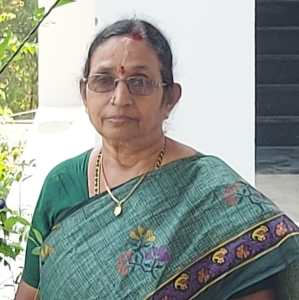
[In this series, Dr. Chengalva Ramalakshmi and Mr. Boddapati Chandrasekhar introduce renowned Telugu short story writers.]


~
Social reform, domestic life and didactic themes.. As reflected in the works of Sripada Subrahmanya Sastry (concluding part)


GUIDE (మార్గదర్శి):
In this story, Sambhusastry is the main protagonist. He is a successful businessman. A young man approaches him seeking a recommendation for a job. Instead of encouraging him in that direction, Sambhusastry dissuades him from seeking employment. He urges the youth to enter business, to stand on his own feet and live independently.


To instil this idea in him, Sambhusastry narrates how he himself rose in life without opting for a job. He recalls that his mother was instrumental in shaping what he became. He praises her mentoring and guidance. While recounting this, he is reminded of the stories his mother used to tell him – stories that inspired him deeply and paved the way for his independent life. Sambhusastry’s recollection and narration of these anecdotes to the job aspirant before him form the chief attraction of the story.
Sripada sustains the reader’s interest while narrating these embedded stories. Nowhere does the reader feel bored. This narration never hampers or diverts the main story. In a highly engaging manner, the writer moves forward effortlessly. His storytelling is lively, purposeful, and organic.
To understand this, consider the following passage:
“Learn agriculture and cultivate it. If not, pursue some business. Can’t afford that, run a pan shop in a hotel – you can live happily. Say that with just twenty-five rupees you can’t manage? With a hundred cheroots and a dozen boxes of matches in hand, he goes around steamers in the mornings, boat jetties in the afternoons, courts by day, and cinema halls in the evenings.
If you say you don’t like that, sit with a sewing machine at our shop. Will provide you a machine. Deny even that?
Take a boxful of clothes and roam from village to village. No investment at all! Profit comes instantly.
Our house is a big mansion. We hardly have inmates. I’ll give you a portion—two rooms, a hall, and a kitchen. No rent. You’ll have shelter.
In spite of all this, if you are still fascinated by a job, go away. Don’t stand before me. Get lost.”
Observe how effectively the writer employs short sentences. Notice the logical progression of thought and the clarity of reasoning. The sole purpose is to turn the young man away from the drudgery of a job and to instruct him, instilling confidence and courage to lead an independent life.
It is in this narration that śilpam (technique) reveals itself. Among all of Sripada’s stories -each of them powerful in its own way – Margadarsi stands apart as a distinct work. Sripada’s mastery of narration is brilliantly reflected here.
With social purpose as its goal and social awakening as its mission, this story is not only distinctive and remarkable among Sastry garu’s stories, but also among Telugu short stories as a whole.
Head Mason Rama Dikshitulu, B.A. (తాపీమేస్త్రి రామ దీక్షితులు బి. ఏ):
The story portrays the condition of young Brahmins who, even after passing their B.A., remain unemployed and are unable to earn their livelihood. They can neither practice any profession independently nor take up small jobs, as such work is considered below their status and dignity. Because of this false sense of prestige, they hesitate to do even the petty jobs that are available.


The writer shows how these rigid social customs and notions of status have made their lives difficult. He suggests that breaking away from such attitudes is the only practical solution. In this story, Ramadeekshithulu, a B.A. graduate, works as a supervisor for mason labourers. The author’s conviction is clear: without a practical and realistic outlook, one cannot succeed in life.
The variety in the story’s design lies in the portrayal of differences in the nature of its characters. The two main male characters remain in the background, while the narrative unfolds through their mothers, who embody and reflect their sons’ respective natures. This ushered in fresh and innovative narrative strategy.
The five scenes of the story remind us of the five acts of a drama or play. Another specialty of this story is SRIPADA’s commentary. This has breathed life into it. Keeping a character’s name as the title is also a specialty. His profession before his name and his educational qualification at the end of the title sparkles laughter in the readers as it is witty. And also because the title brings out the disparity between the protagonist’s profession and his educational qualifications.
Grains of Paddy (వడ్లగింజలు):
The moment Sripada’s name is mentioned, his story Vadla Ginjalu immediately comes to mind. It is a famous and enduring story that earned him lasting name and fame. Sripada himself regarded it as the best among his stories.
This is the only Telugu story that portrays the skill, dedication, and discipline of a chess player.
Thimmagajapati Maharaju is an excellent chess player. Sankarappa, a poor Brahmin with a natural flair for chess, lives in Thuni. Having heard of the Maharaja’s mastery of the game, Sankarappa longs to play a single game with him. He tries to gain entry into the palace, but the Tanedar and the Diwan, unable to recognise his chess talent, insult and humiliate him and throw him out.


An old woman who runs an inn listens to his story. She feeds him, gives him shelter, and treats him like her own son. She guides and encourages him in fulfilling his wish. At last, Sankarappa gets the opportunity to play a game of chess with the Maharaja and defeats him, though the Maharaja puts up a stiff fight.
Accepting his defeat, the Maharaja asks Sankarappa to ask for any reward he desires from the kingdom. Sankarappa humbly replies: ‘There are sixty-four squares on a chessboard. Place one grain of paddy in the first square, double it in the second, and continue doubling it square after square. That alone will be enough for me, my lord.
When the Diwan calculated the number of paddy grains Sankarappa had asked for and said, ‘To fulfil this request, Your Majesty, even the entire Peddapuram kingdom would not suffice,’ the Maharaja was stunned. Admitting, ‘We have been defeated even in this,’ the ruler, impressed by Sankarappa’s ingenuity, honoured him by granting him an agrahara.
The effortless narrative skill, the effective and lively dialogue that adds charm to it, the ability to create a setting suited to the theme, and the skill in building vivid characters – above all, the powerful, native Godavari Telugu that touches and moves the reader’s heart, along with mastery over language – give the story Vadla Ginjalu a distinctive place not only among Sastry’s stories but also in modern Telugu short fiction.
Anyone who wishes to understand the Kathasilpam and nuances of story writing must read this story.
Attar of roses (గులాబీ అత్తరు):
Artists long for their masterpieces to be appreciated by true connoisseurs. It is only natural. This story shows how artists, denied such recognition, suffer neglect, struggle, and deep mental anguish, and how their creations often remain unnoticed or forgotten because those who matter refuse to see them.


Many obstacles stand in his way. At last, the Tanedar, captivated by the fragrance of the attar, is deeply impressed by Shakurulleekhanu’s craftsmanship and sympathises with him. A court official advises him on how to catch the Maharaja’s attention during his leisurely shikara walk.
But the Diwan disapproves. He does not want the attar maker to meet the Maharaja. The Tanedar’s plan is thwarted by the Diwan’s interference.
“Is there no honour for artists even in the Peddapuram kingdom?” Khanu asks bitterly, crushed by despair.
Frustration and anguish overwhelm him. A nameless rage takes hold of his mind. In a sudden fit of anger, he hurls the bottle of gulabi attar against the fort wall.
Only after this reckless act does Shakurulleekhanu finally get the darshan of the Maharaja. Riding along that very path, the Maharaja inhales the attar-filled air, is transported by its fragrance, and stands spellbound.
In the end.. What?
Has the Maharaja chided the Diwan? Has he appreciated Shakurulleekhanu’s wonderful skill? Has the king honoured him?
SRIPADA doesn’t reveal everything; the story has an open ending.
It is a tale that showcases exceptional skill in both its plot and conclusion.
Below are the beginning and the ending of the story .
Enjoy reading. Understand the technique of story writing. Sure that you feel an urge to read SRIPADA’s short stories.
Opening:
Just one more step. The Diwan appears.
Eager for even a passing glance in his direction, anxiously hoping for his favour and waiting for his grace, clinging to his support and calculating how to place himself so that the Diwan might simply say, “All right” – yet inwardly reproaching himself for the Diwan’s greed – he notices the hall filled with nobles, distinguished citizens, royal relatives, and men of the court, all gathered there.
Ending:
The bottle shattered with a sharp crash.
Shards of glass flew and scattered everywhere.
The hearts of the royal companions skipped a beat.
The entire place was suddenly flooded with the rich fragrance of attar.
Everyone seemed intoxicated by its perfume.
In that fleeting moment, as their senses returned and all eyes turned towards him, Khanu instinctively looked back – and stood frozen, as if turned to wood.
As everyone watched in stunned silence, Sri Sri Sri Vatsavai Chathurbhuja Thimmagajapati Maharaja was approaching, casting a half-glance in that direction.
Raising her muzzle, Pancha Kalyani breathed deeply and deliberately, with measured effort.
***
Even today, say those who have visited that place, the fragrance of rose attar still lingers in the air.


CONCLUSION :
Sripada Subrahmanya Sastry belongs to the august company of the world’s master storytellers. Telugu readers may proudly claim him as their own – a sovereign of narrative art, often finer than many whose names resound across the world.
🌹🌹🌹