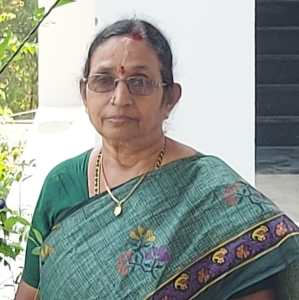
[In this series, Dr. Chengalva Ramalakshmi and Mr. Boddapati Chandrasekhar introduce renowned Telugu short story writers.]


~
MASTER OF SHORT STORY REALM ADHUNIKA KATHAA CHAKRAVARTHI SRIPADA SUBRAHMANYASASTRY – PART – A
The beauty and elegance of the Telugu language are wonderfully blended in his works. They are written in a very informal and conversational manner. His writing carries forward Gidugu’s colloquial language movement. He is a true practitioner of employing day-to-day language in short stories. A living language.
His short stories and novels stand as testimony to his adoration for Telugu prose. Among the Telugu short story writers, he is the only one to have received the Kanakabhishekam. He is none other than Sripada Subrahmanya Sastry. His contribution in giving strength and vitality to prose is remarkable. If Gurajada breathed life into the modern Telugu short story, Sripada infused energy and vigour into it.


Those were the times when poetry and prose were advancing together – each with its admirers and devoted supporters. Both streams were enriching Telugu literature, creating a literary output that transported readers into ecstatic delight.
Though writing poetry was effortless for Sripada, he chose prose as the vehicle for expressing his literary insights and emotions.
That’s why the wonderful Story writer and an eminent litterateur.. Sri Malladi Ramakrishna Sastry said:
“If you don’t read his prose, Telugus cannot truly understand.. the very identity of the Telugu people becomes uncertain.”
So, many critics, literary people and admirers of Sripada consider Sripada – the trace of stories, footsteps, and identity.
It was Sripada who gave stories both vertical and horizontal expansion. He is the one who gave a new direction to the evolving Telugu short story.
The Vedic, Srauta, Smartha, Jyotisha and Mantra traditions were their hereditary disciplines. They belonged to a lineage devoted to Vedic ritual practices such as yajnas and sacrificial rites. In every generation the members of that family studied all these Vedic branches – deeply and thoroughly.
Sripada’s father instructed him in all these disciplines. To him, Sanskrit was the divine language, and his firm belief was that nothing else was worth learning. This became an obligation for the son as well.


Yet, in a striking turn, Sripada set aside all of these traditions and developed a great affection for the Telugu language, in which he began to write. His decision was not only bold but also momentous. Sripada carved a new path. He said that being able to write stories in Telugu, and becoming a writer, brought him immense inner joy.
Sripada said, “In the Telugu language – the most melodious one, though my own people often looked down upon it, while Western scholars praised its sweetness and power, I consider myself fortunate to have scribbled even a few lines in it.”


It was indeed an honest confession. Yet, Sripada did far more than merely “scribble a few lines” in Telugu. What he humbly referred to as scribbling actually amounts to thirteen anthologies of stories, some novels, literary essays, and much more. Moreover, the grace, idiomatic richness, gentle flow, and melodious intonation of the Telugu language are abundantly present in his writings. His oeuvre stands as a veritable treasure-trove of Telugu literature.
Sripada Subrahmanya Sastry (1891–1961) stands as one of the luminous voices of Telugu letters. A master craftsman of narrative and nuance, his creative legacy embraces short stories, novels, and literary essays. Gifted in the refined art of Avadhanam, he possessed a remarkable memory and verbal dexterity. For his pioneering role in shaping modern Telugu storytelling, he is reverently hailed as Adhunika Katha Chakravarthy – the Sovereign of the Modern Short Story.


He also rendered the entire Valmiki Ramayana into Telugu prose, a literary undertaking of immense devotion and discipline. For nine formative years, he nurtured and guided the intellectual spirit of his time through the magazine Prabuddha Andhra.
Personal Outline
Born on 23 April 1891 in Polamuru, he later spent his final years in Rajahmundry, departing from this world on 25 February 1961. He was the son of Lakshmipati Somayajulu and Mahalakshmi Sovidevi, inheriting from his father not only a lineage, but also the sacred weight of Vedic learning.
Early Life
Raised within a Brahmin household, Sastry’s early education was governed by tradition: his father, a Vedic scholar, permitted him to study only the revered Sanskrit scriptures. The young Sripada obeyed this path, absorbing the classical foundations. Yet, in the quiet fires of his inner longing, he later pursued a wider intellectual horizon, stepping beyond inherited boundaries.


Selected Works
- Anubhavalu Jnapakalanu – a reflective tapestry of memories and experiences
- Vadla Ginjalu
- Pullampeta Jaree Cheera
- Veeranganalu (1924) – a celebration of heroic feminine spirit
- Arikalla Kinda Mantalu
- Veera Puja
(The rest in the next parts..)