[In this series, Dr. Chengalva Ramalakshmi and Mr. Boddapati Chandrasekhar introduce renowned Telugu short story writers.]


~
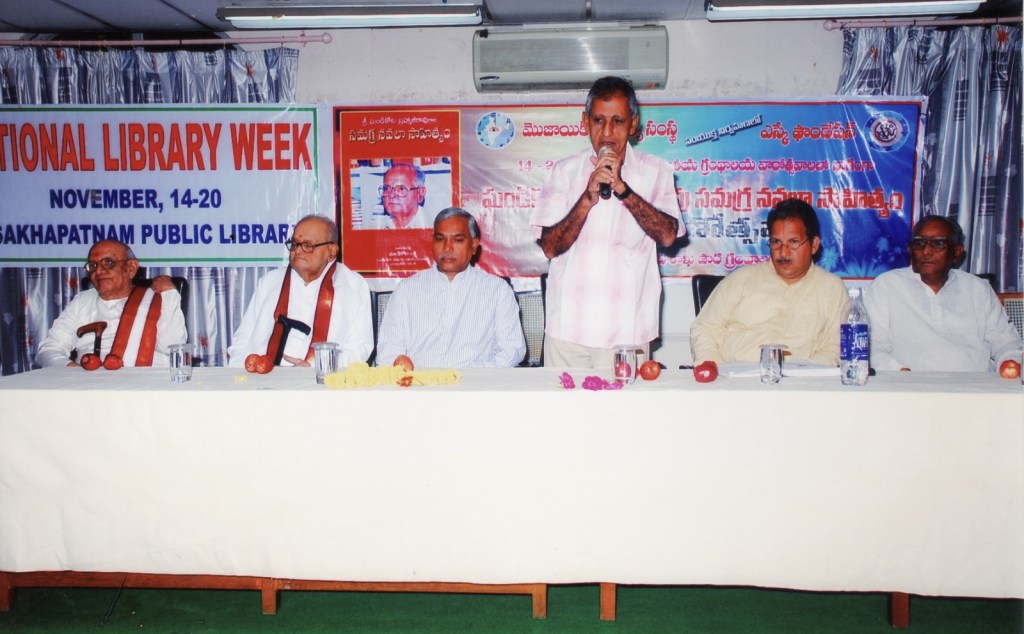
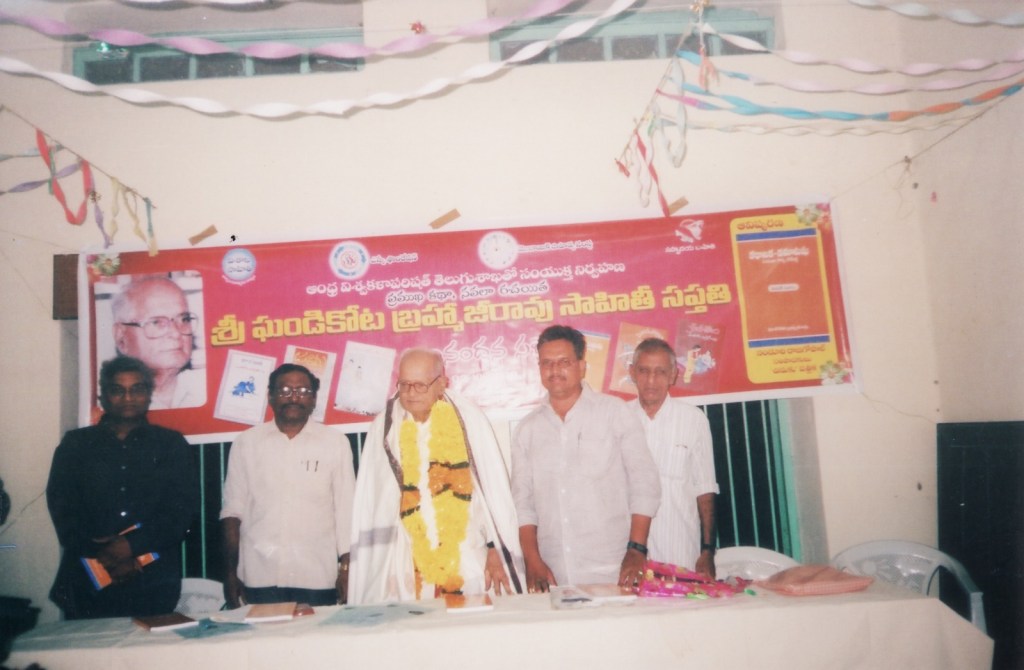
‘Story teller of artistic simplicity.’ – Ghandikota Brahmajirao
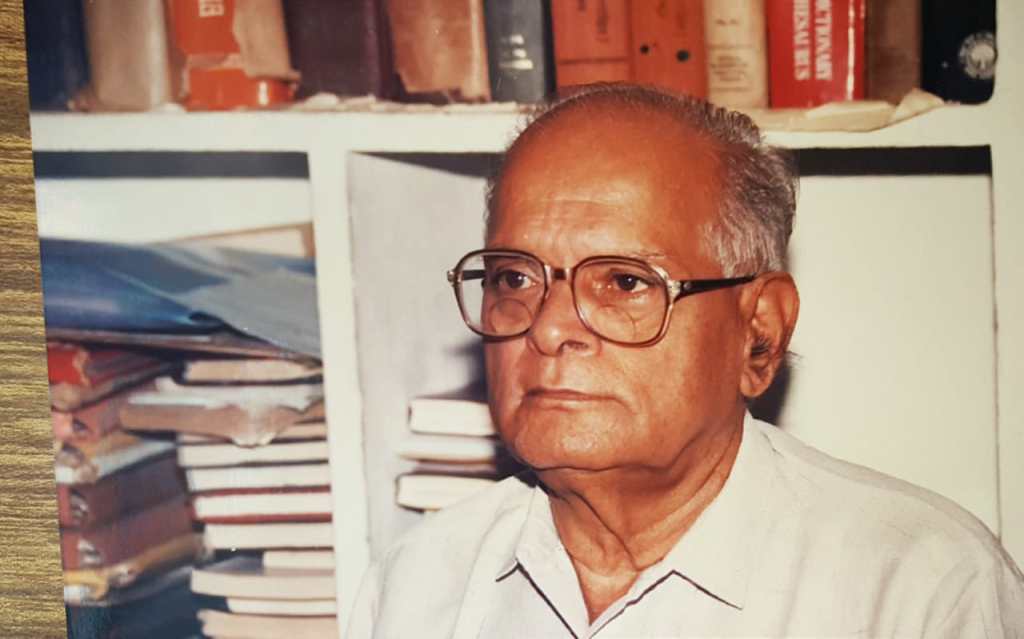

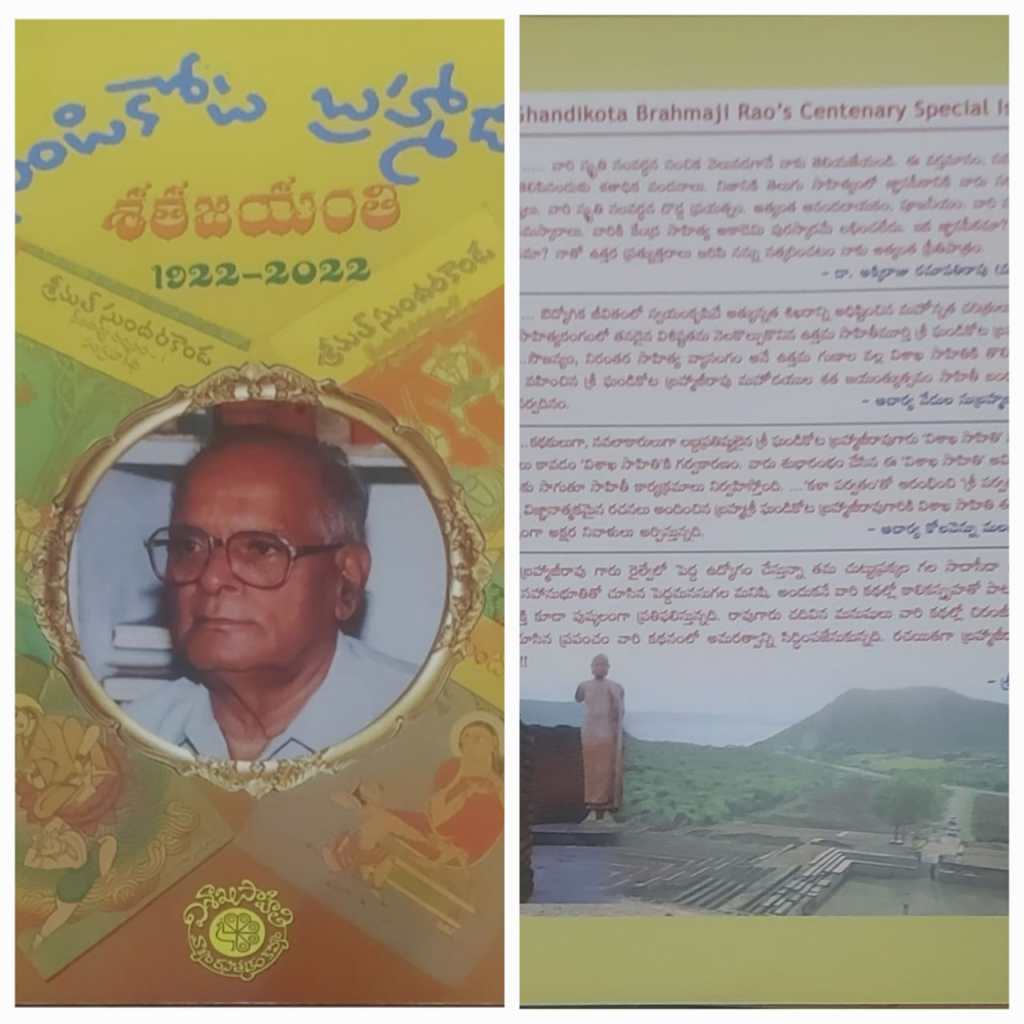
Born in 1922 at Ponduru, renowned for its fine Khadi, of Srikakulam District, to Sundaramma and Lakshminarayana, Sri Ghandikota Brahmajirao finished his schooling in Srikakulam municipal high school and went to AVN College, Visakhapatnam, for Intermediate. Much later, while in Job, to quench his thirst for education, he earned M.A. degrees in English, Sanskrit and Telugu.

Soon after completing intermediate, he joined Bengal Nagpur Railway as a Mechanical Engineering Apprentice in 1941, eventually was elevated to the higher posts. In 1980, he retired as a first Class Gazetted Officer. That was his Job Journey.
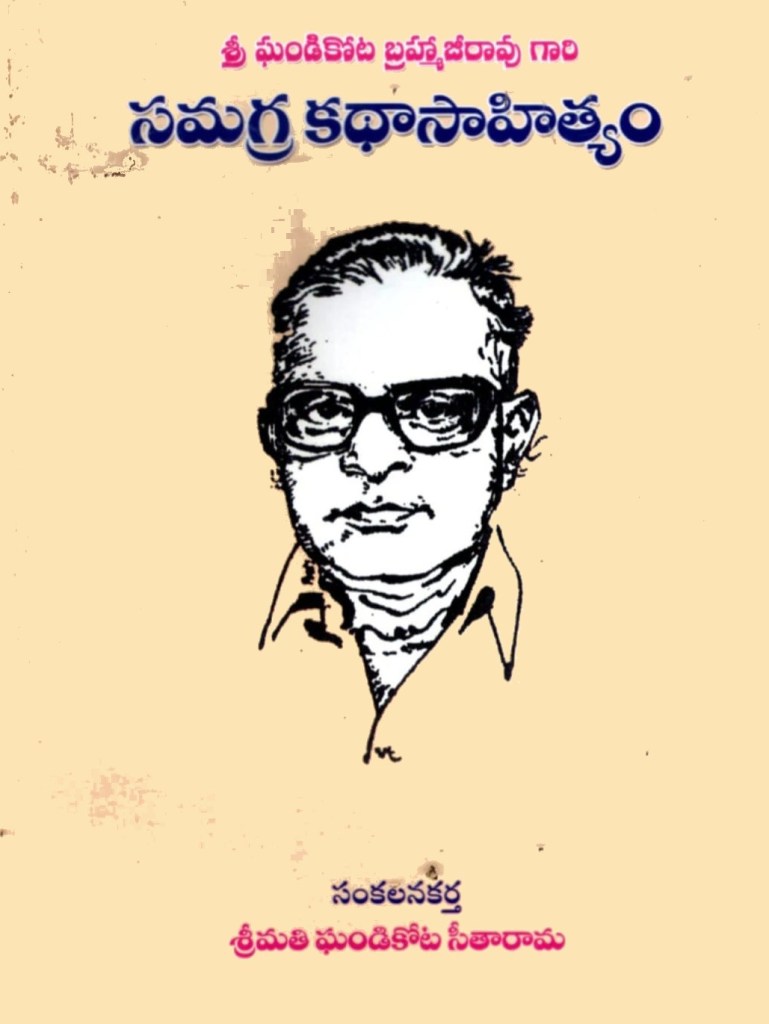
Sri Ghandikota Brahmaji Rao began writing at an early age and continued to do so till his last breath. He has to his credit nearly one hundred short stories and twenty novels. While he was widely known for his socially themed and voluminous fiction, he made a significant departure by rendering the Srimad Sundarakanda in five parts, bringing out its beauty and spiritual essence. He was also a poet and a literary critic.
Among his short stories that won readers’ hearts and were highly appreciated by critics are:
- Karadivilo Gandhapumaanu (A sandalwood tree in a dense forest.)
- Vidhi Varinchina Theerpu (The Verdict Decreed by Fate)
- Tabellu (Tortoises)
- Enda (the Sun)
- Malupu (Turn)
- Janamejeyudu (King Janamejaya)
- Guide Dog (Guide Dog)
- Sapthapadi
- Kaveri Sethuraman (Kaveri Sethuraman)
And many more.

Some of his well-known novels include:
- Parugulide Chakralu -pravahinche jeevanavahini (Racing wheels – flowing life)
- Navvindi Nagavali (Nagavali Smiled)
- Sramika Sakatam (The Labourer’s Cart)
- Ragalatha
- Sri Parvatham (Sacred Mountain)
All India Radio broadcast his novel Sramika Sakatam as a radio play. It was also presented as a live reading serial under the programme “Navala Sravanthi.” Both versions won wide appreciation from listeners as well as critics.
A noteworthy aspect of his life is that Sri Ghandikota Brahmaji Rao worked as a research scholar under Prof. Tumati Donappa. He spent nearly three years researching the realm of the short story and almost completed his thesis. However, he could not submit it and therefore missed being a doctorate.


~ ~ ~
His distinctive qualities as a person and as a writer.
*Divakarla Venkataavadhani was his teacher.
*Very gentle and soft spoken.
*Quite Unassuming
*Indian Government sent him to America for training in Diesel Locomotive Structure.
*Though deeply interested in old literature and a serious student of it, he chose to write in modern literature
*The short story and the novel emerged as his favourite genres and his mastery of them won him wide appreciation and popularity.
* Out of his good grounding in old literature emerged from Sundarakaanda in five volumes.
*The first writer, in Independent India, who wrote about the operational and technical shortcomings in the Railway Mechanical Department, in his novel.
*Parugulide Chakralu -pravahinche jeevanavahini (Racing wheels – flowing life) won second prize in Andhara vaarapathrika Magazine Competitions.
*His novel Sramika Sakatam (The Labourer’s Cart), and Vijayawada Junction got first prizes in Andhra Jyothi Competitions consecutively in 1982 and 1983.
Also are there his unpublished novels.
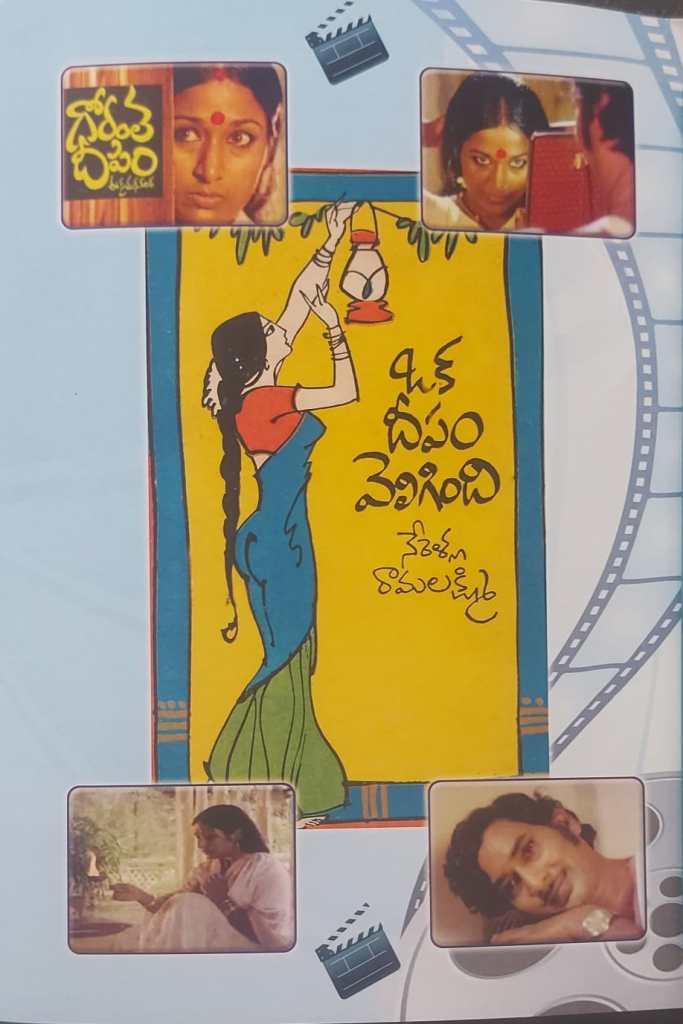
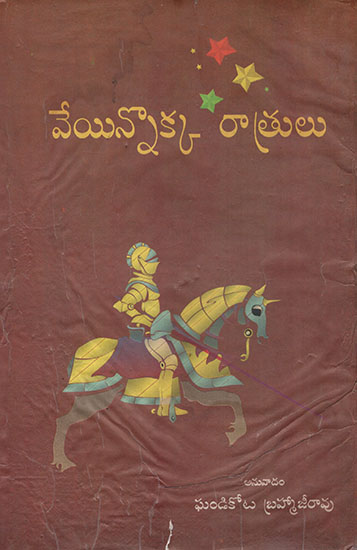
- Written A novel titled “A Lamp Was Lit in the Name of the Third Daughter – Nerella Ramalakshmi. It was later made into the film named Goranta Deepam by Sri Bapu.

- In the name of his Son Viswanath, Written a novel titled ‘The Slaves’ Paradise (Banisala Swargam).

Not only this.
- Considered to be one of the best novels of that year.
- Serialized in Andhara Jyothi.
- His novel Gaalivaana (Windstorm) published in 1995, earned him the First Prize in the competitions conducted by the Kurella Someswara Rao Literary Trust.
- A novel distinguished by its uniqueness in narrative craft (literary technique).
Awards Aplenty
In fact, Sri Brahmaji Rao deserves more.
HIS KATHA SILPAM OR TECHNIQUE
Whiteness pervades milk, just as coolness pervades moonlight. Kathāśilpam (TECHNIQUE ) runs through all of an eminent writer’s work.. be it of any genre he deals. To a question, therefore, “Where is śilpam found in a story?” there would be a counter question.. Where isn’t it found in a story?
It means.. it has to be traced throughout the story if the story is expertly written. Limiting śilpam to a single aspect viz.. language, plot, tempo, narration, mood, or even the title.. is a mistake as it reflects only a partial and incomplete understanding of śilpam.
This is Simply What KATHA SILPAM is.
Sri BRAHMAJIRAO has imbibed all these traits very superbly.
His railway job provided him with rich themes for his stories. Labourers and colleagues became living characters in them. The ambience of his workplace is recreated with remarkable authenticity. His characters speak naturally – in a highly colloquial tone. All these lend a deep naturalness to his stories.
Can any writer, blessed with such material, create a story like Brahmaji Rao?

This question may arise in our minds.
The answer would be – perhaps a few; not many.
A handful of writers, apart from merely narrating the ambience they observe, can truly create characters, breathe life into them, and elevate them from the ordinary to the extraordinary. They mould and sculpt them in such a way that the traits they wish to reveal shine forth meaningfully.
In such surroundings, in such contexts, do people behave humanly or inhumanly?
How close do these portrayals come to real life?
It is the writer’s treatment of these situations that gives universality to characterization.
When the pain and pleasure, the surge of emotions, the attitudes and behaviour of a writer’s characters are felt by people everywhere, they attain universality — the very purpose of literature.
Only a handful of authors achieve this rare distinction.
Undoubtedly, it is a rare and wonderful gift.
Ghandikota Brahmaji Rao is one such writer.
Hats off!


At first glance, everything appears simple. Yet the writer’s genius is seen and felt in turning this simplicity into beautiful literature.
His created world of men and women in his stories become unforgettable.
That is the true measure of his success.

**BRAHMAJIRAO wrote over a hundred stories. Authored twenty five novels.
All are from life. The people encountered or observed by him became his characters. All Just seems to be simple. The writer’s genius in turning this into beautiful literature is seen in his stories and novels. His characters become memorable. This is proof of the writer’s success.
A Literary Appreciation of Sri Ghandikota Brahmajirao’s another story titled.. Kāraḍivilō Gandhapu Mānu (The Sandalwood Tree in the Wild Forest)
Story Summary:
Mr. Rao is a senior officer – an engineer. One day, he sets out in a jeep with his wife to attend a public function. Their driver is Appa Rao, an uneducated man, yet deeply cultured and kind-hearted.
The “sandalwood tree” in the title symbolizes him – his innate goodness and the fragrance of his humanity. Shall we discover what that fragrance truly is, dear readers?
*The Fragrance of Humanity in a Harsh Forest:
In this remarkable short story, Brahmaji Rao once again demonstrates how ordinary life, when touched by artistic vision, becomes profound literature. The narrative appears simple: an officer, his wife, and a driver travelling through forest terrain. Yet beneath this plain surface lies a deep moral contrast – between authority and humility, pride and sacrifice, position and personality.
Character Contrast as Structural Strength
Engineer Rao represents institutional power. He insists on recognition of his status. Even his mode of address – “Driver!” – reveals hierarchy. In contrast, Appa Rao, though uneducated, embodies inner dignity. His mild protest – “You could call me Appa Rao” – is not rebellion but a quiet assertion of self-respect.
Thus, the conflict is not external; it is psychological and ethical.
Symbolic Foreshadowing:
The mention of tigers in the Anantagiri forest is not a decorative detail. It is narrative preparation. The author plants this element carefully so that when the tiger finally appears, it feels inevitable rather than accidental.
This is craftsmanship – subtle and purposeful.
Similarly, the line:
“As if there were nothing else in his stomach..” is not a casual description. It foreshadows the later revelation of Appa Rao’s hunger. The reader retrospectively understands his physical condition. The hunger is not merely bodily; it symbolizes neglect- how society overlooks the invisible labourer.

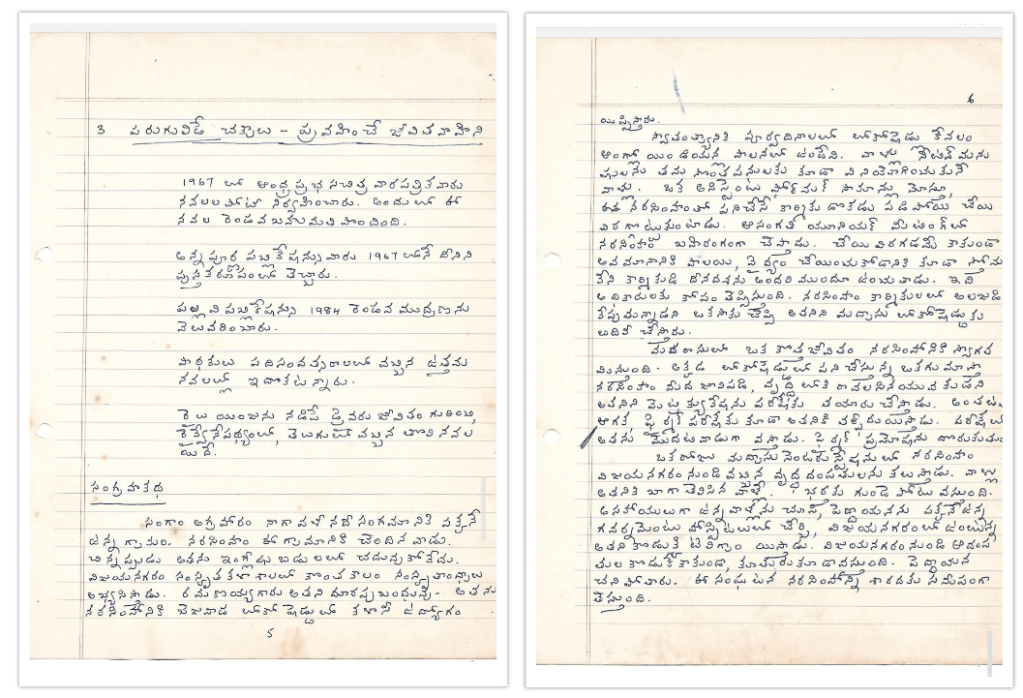
Handwriting of Shri Ghandikota Brahmajirao
Human Dignity Amid Social Indifference:
The tea-stall episode is a masterpiece of understatement.
“Do they care whether the driver has eaten or starved?”
This line exposes class insensitivity without moral preaching. The author does not comment. He allows the dialogue to speak.
Appa Rao’s hunger parallels his emotional invisibility. Yet he carries no bitterness. His humanity remains intact.
The Climactic Moral Reversal:
When the tiger confronts them, the metaphor becomes literal.
The real “wild forest” is not geographical – it is social arrogance.
Appa Rao, the so-called insignificant driver, stands between danger and his employers. He risks his life instinctively. There is no calculation, no expectation of reward.
Rao’s reaction – “He should die before my eyes” – reveals the depth of his moral poverty. In contrast, Mrs. Rao’s transformation restores faith in human compassion. Her act of tearing her sari to bandage Appa Rao is symbolic – status gives way to humanity.
And Appa Rao’s words:
“I offer my life for yours.” complete the moral arc.

The Title as Central Metaphor
The concluding image is unforgettable:
“The thick fragrance of a mature sandalwood tree spread through the forest.”
The sandalwood tree stands for Appa Rao.
Sandalwood releases fragrance even when cut or wounded. Likewise, Appa Rao, even while bleeding, radiates nobility.
The forest represents a society hardened by hierarchy. The fragrance represents pure humanity that transcends class.
The title, therefore, is not ornamental. It is interpretative. It is the key to the story’s meaning.
- Artistic Features
- Economy of narration
- Purposeful foreshadowing
- Symbolic layering
- Natural dialogue
- Moral depth without didacticism
Brahmaji Rao’s strength lies in artistic simplicity. He does not shout. He suggests. He does not preach. He reveals.
Final Reflection
This story reminds us that true greatness does not arise from designation but from disposition.
In the dense forest of social inequality, it is the unseen sandalwood tree that spreads lasting fragrance.
A powerful, meaningful, and artistically crafted short story – indeed a fitting example for serious literary study.

Literary Appreciation of Sri Ghandikota Bharmajirao’s story.. Janamejaya..
Story Outline:
In this story, Shankar is the central character. He inherits a chrysanthemum flower business from his maternal uncle, marries his uncle’s daughter, and becomes prosperous. With an affectionate wife, loving children, and a caring mother, he leads a happy and dignified life.At that point, he ventures into a skins and hides business with a friend and earns unimaginable wealth. But killing snakes for trade becomes an unbearable moral wound for his family. Slowly, he is cast out – not formally and physically , but emotionally.
What finally happens?
Come.. let us see.
A
“We had reservations for tomorrow. But our work finished earlier. Staying in the retiring room at New Delhi station and eating in the restaurant had become tiresome. So we decided to leave a day early.
Fortunately, the two berths reserved were not claimed, and at the last minute the conductor allotted them to us.”
Thus Rao introduces himself and his friend Murthy to the man seated opposite them in the Grand Trunk Express. That man is Shankar.
Listen carefully how Brahmaji Rao reveals Shankar’s sociable nature through his very tone of speech:
“So, we are to travel together for a night, a day, and a few more hours…
We can spend the journey pleasantly.”
He even calls his acquaintances – Pillai and Kuppuswami – and joins them for drinks and dinner. A small act, yet it speaks volumes about his warmth and camaraderie.
B
Through conversation, Rao and Murthy understand that Shankar owns a Skins and Hides Company, travels across the world on business, and is a man of great wealth.
For such a person to mingle with them so freely and affectionately is no ordinary experience. It fills them with quiet astonishment and delight. He is an awe-inspiring person for them. The social distance between them seems momentarily erased. Beneath their casual words—“It is something rare that he spends time with us so freely”—there lies subtle pride, tender self-esteem, and inner exhilaration.
To express such delicate shades of human feeling through simple, unadorned dialogue – this is Brahmaji Rao’s keen observation of life.
Embedding vast emotion within small utterances – this is his narrative hallmark.


C
As the journey advances, intimacy deepens. Shankar begins to speak not only of business but of his personal life.
He once earned well through the chrysanthemum trade. With a wife, children, and mother, life flowed like a boat of flowers—graceful and fragrant. A caring mother, children waiting eagerly, a loving wife, respectful friends -.
What more is needed?
Is it not a Paradise!
To him, that was a complete life. Meaningful. Valuable. Honourable.
Then, at that precise turning point, he reconnects with his high school friend Venkatachalam. The friend hands over his Skins and Hides company to Shankar and moves into another venture.
That change becomes a storm at home. The family cannot bear it.
Affection fades.
Warm greetings vanish.
In his own house he becomes a stranger – an orphan amidst his own people.
Let us hear it in Shankar’s own voice:
“My mother shut the door and refused to see my face.
My uncle took my children away to his village.
My wife – the one who tied the sacred thread with me – served me food in the outer room, where labourers usually eat.
Her face was pale from endless weeping.
The money I sent every month was returned. She asked me not to send any more.
Later.. later.. I grew used to it..
Abandoned by my own people, I was thrown upon the world.”
See how Brahmaji Rao’s phrasing pierces straight into the reader’s heart.
Do we not feel our chest tighten?
Does not an undefined anxiety unsettle the mind?
When the emotional turbulence of a character becomes the reader’s own lived experience – that is true craftsmanship.
Through Shankar, he achieves it magnificently.
D
“For six months I left home. My life was in forests.. in pits.. catching snakes and making luxury goods from their skins. I trapped every kind of snake..
When I step into the house, they move about in fear for their lives. When I leave, they breathe freely. I need no other curse..”
Shankar’s voice trembles. He cannot continue. Kandaswami gives him a sleeping pill and lays him down.
As he narrates his ‘serpent sacrifice’, the listeners shudder. Before their eyes flash images of severed snake pairs – like broken households, ruptured bonds. A strange dread fills the air.
And now – look at the ending:
“After crossing Vijayawada, the train moved slowly over the Krishna river. Rao opened his trunk and threw something out of the window. I too took the soft purse from my bag and flung it into the river.”
Those purses Shankar had gifted them –
No need to repeat what they were made of.
Shankar’s killing of snakes for his hides business inevitably reminds us of King Janamejaya’s serpent sacrifice in the Mahabharata. That symbolic resonance is why Sri Ghandikota BrahmajiRao chooses the title Janamejaya.
Thus, through a seemingly simple travel episode, he weaves moral conflict, psychological pain, social sensitivity, and epic symbolism into a compact narrative.
That quiet depth –
That emotional undercurrent –
That restrained yet powerful artistry –
That is Ghantakota Brahmaji Rao.
🌹🌹🙏